
On this page
Compare the components, not only the label
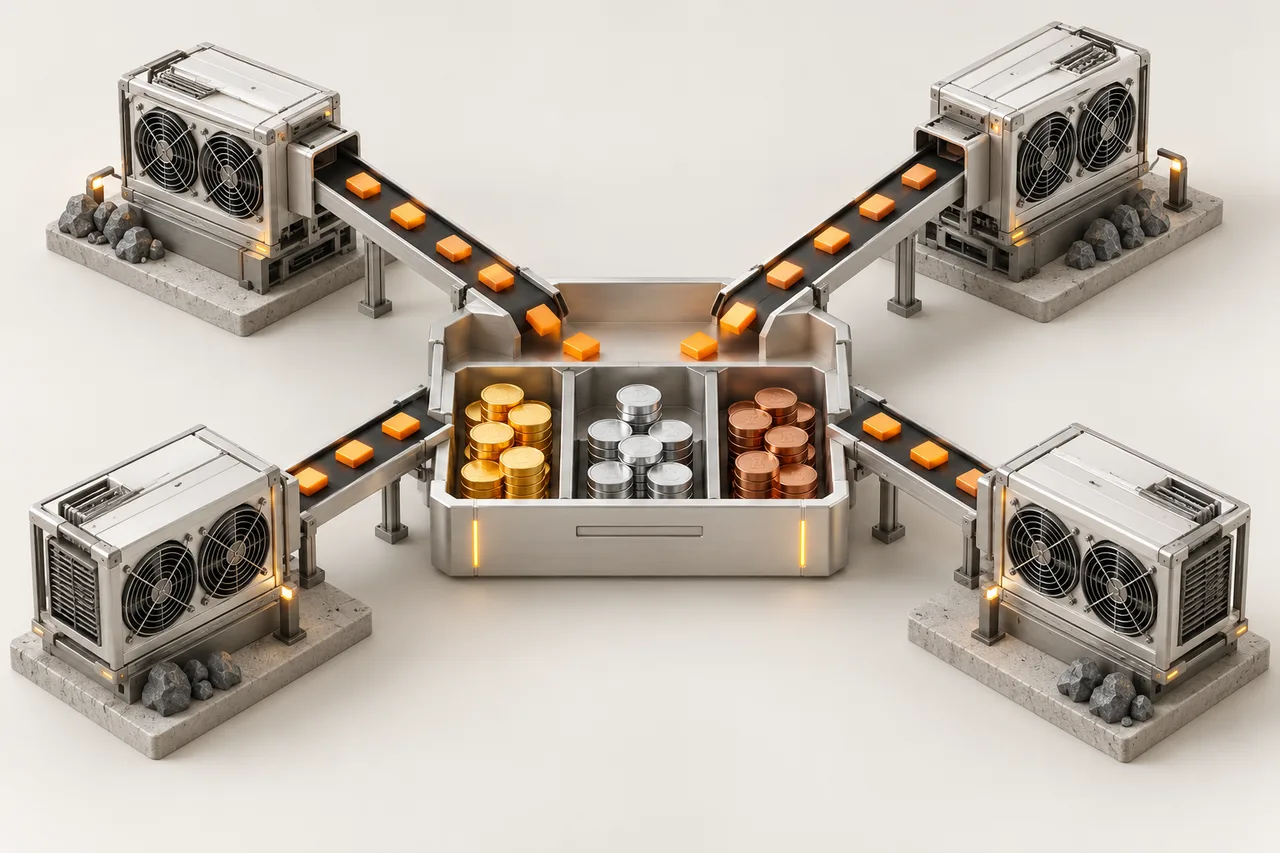
The table is a conceptual comparison. Each pool defines its fee basis, fee estimate and share window. ViaBTC, for example, documents PPS+ as PPS treatment of subsidy and PPLNS treatment of transaction fees. Read the current method description for the specific coin; a label alone is not a complete payout formula.
| Method | Main distinction |
|---|---|
| PPS | Expected subsidy-based value per accepted work; check fee treatment |
| FPPS | Expected subsidy and transaction-fee value |
| PPS+ | PPS subsidy plus pool-defined fee allocation |
| PPLNS | Actual pool rewards distributed over a share window |
Match variance to your operating schedule
For a miner that frequently disconnects, inspect how the share window treats entry and exit. For a steady operator, compare sufficiently long periods rather than one lucky day. A hypothetical pool earning twice its usual reward on one day has not established twice the expected annual return. Record accepted hashrate and elapsed time beside credited coins.
Separate accrual from a transfer
An account can accrue rewards while remaining below its payout threshold. Payout schedules, holds after address changes and supported payment rails are separate from the reward method. Check the transfer record and transaction reference before calling a payment missing. Conversely, a pool account balance is not proof of an on-chain receipt.
Run a controlled comparison
Use the same algorithm, a comparable time window and measured accepted work. Record credited coins before converting them at one consistent exchange-rate convention. Keep fees, withdrawals and merged rewards in separate columns. If one device was offline for six hours, correct the production comparison before judging the pool. Save the rule version and date alongside the result.
References
Original documents and further reading. Check the manual for your exact equipment.