
On this page
Identify which circuit the sample belongs to
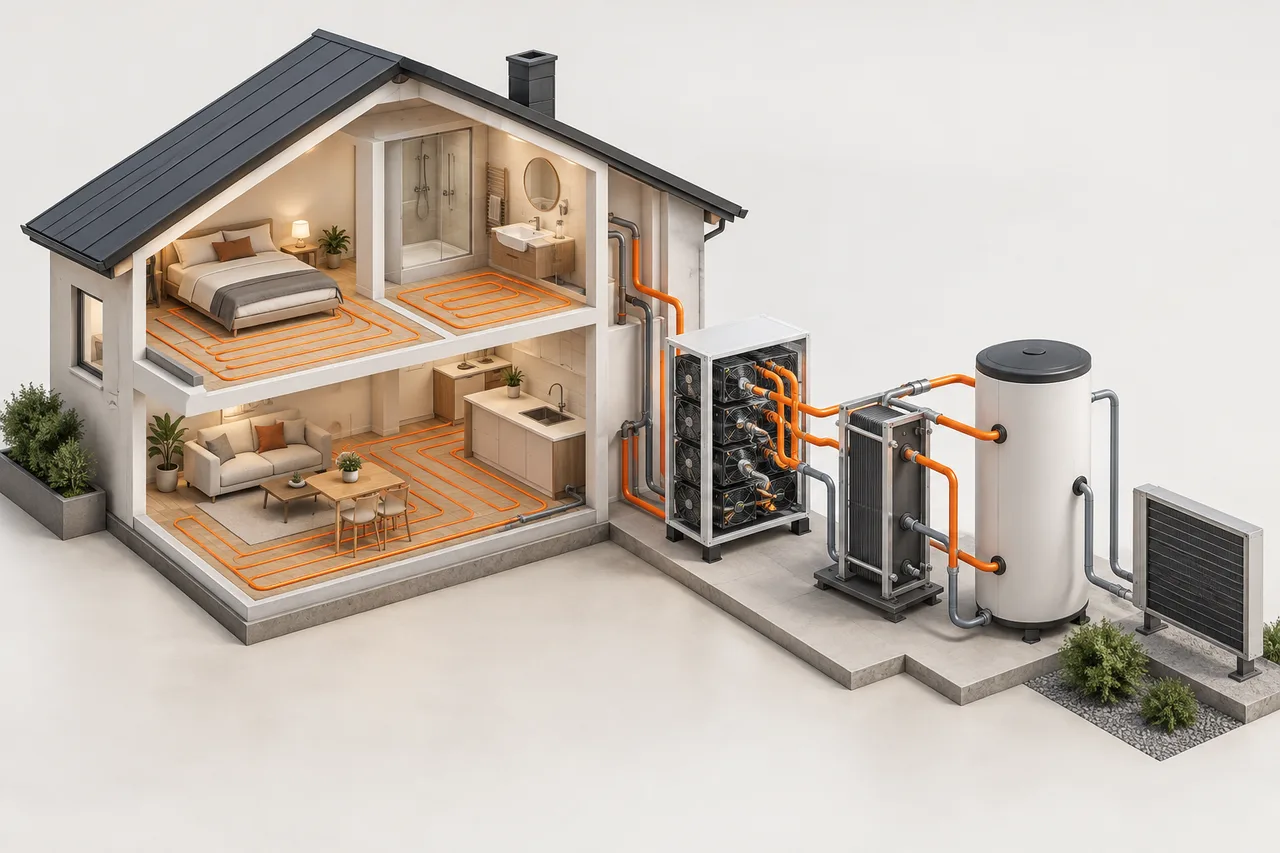
A hydro installation may contain a miner-side loop, an external heat-rejection circuit and spray water. These fluids are not interchangeable. BITMAIN’s ANTSPACE document presents separate water-quality tables for different uses. Label sampling points on the system drawing before deciding which limits apply; a reading without its circuit identity can lead to the wrong correction.
Use the exact system and miner requirements
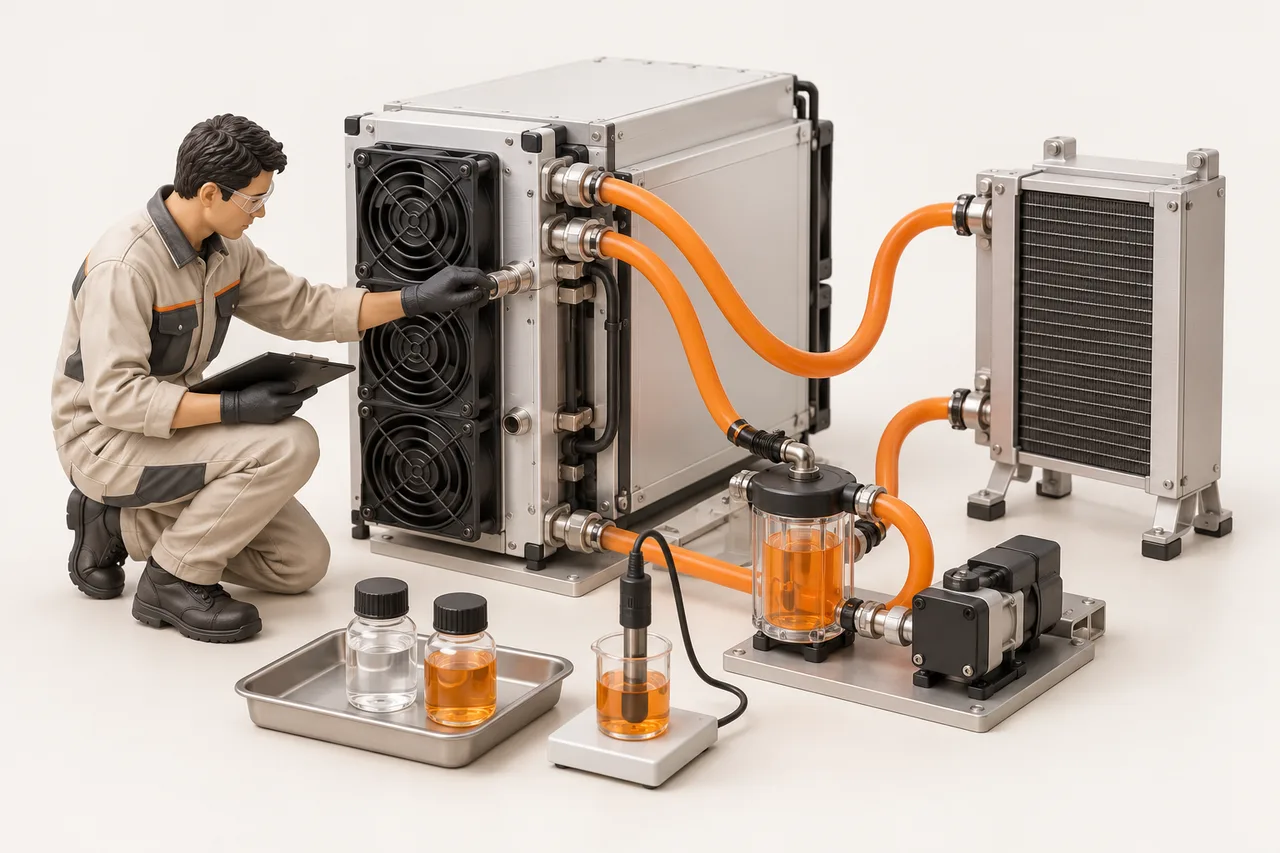
Match the system manual, miner manual and fluid supplier documentation. Record the approved product, concentration where applicable, materials compatibility and operating conditions. Do not substitute an automotive coolant or mix products based only on color. Ask the system supplier to resolve conflicting requirements before filling the loop, with the agreed specification kept in the commissioning record.
Interpret conductivity with the fluid chemistry
The ANTSPACE guidance notes that additives can change conductivity and that a higher reading is not automatically unacceptable in every coolant formulation. This is why copying a deionized-water limit into an inhibited-coolant loop can be wrong. Compare the correct fluid specification and its trend, together with other required tests; investigate unexplained changes rather than chasing one universal number.
Build a commissioning record
Before normal operation, have the responsible team verify the approved fill, leak checks, flow, pressure and controls using the actual system procedure. Check the branch serving each miner, not only the central pump display. Record instrument identity and measurement location so a later reading can be compared on the same basis.
| Record | Include |
|---|---|
| Fluid | Product, batch, fill date and circuit |
| Sample | Point, temperature, method and results |
| Operating state | Load, branch flow, pressure and temperatures |
| Service | Filter work, top-ups and changes since last sample |
Investigate trends with the maintenance history
If a sample changes after a top-up, inspect what was added and whether the sampling method stayed consistent. If temperature rises without a fluid-test change, inspect flow, filters and heat rejection as separate possibilities. Set the sampling schedule from the manufacturer and site conditions, and adjust after commissioning evidence rather than adopting a calendar from an unrelated installation.
References
Original documents and further reading. Check the manual for your exact equipment.