
On this page
Air: manage the whole airflow path
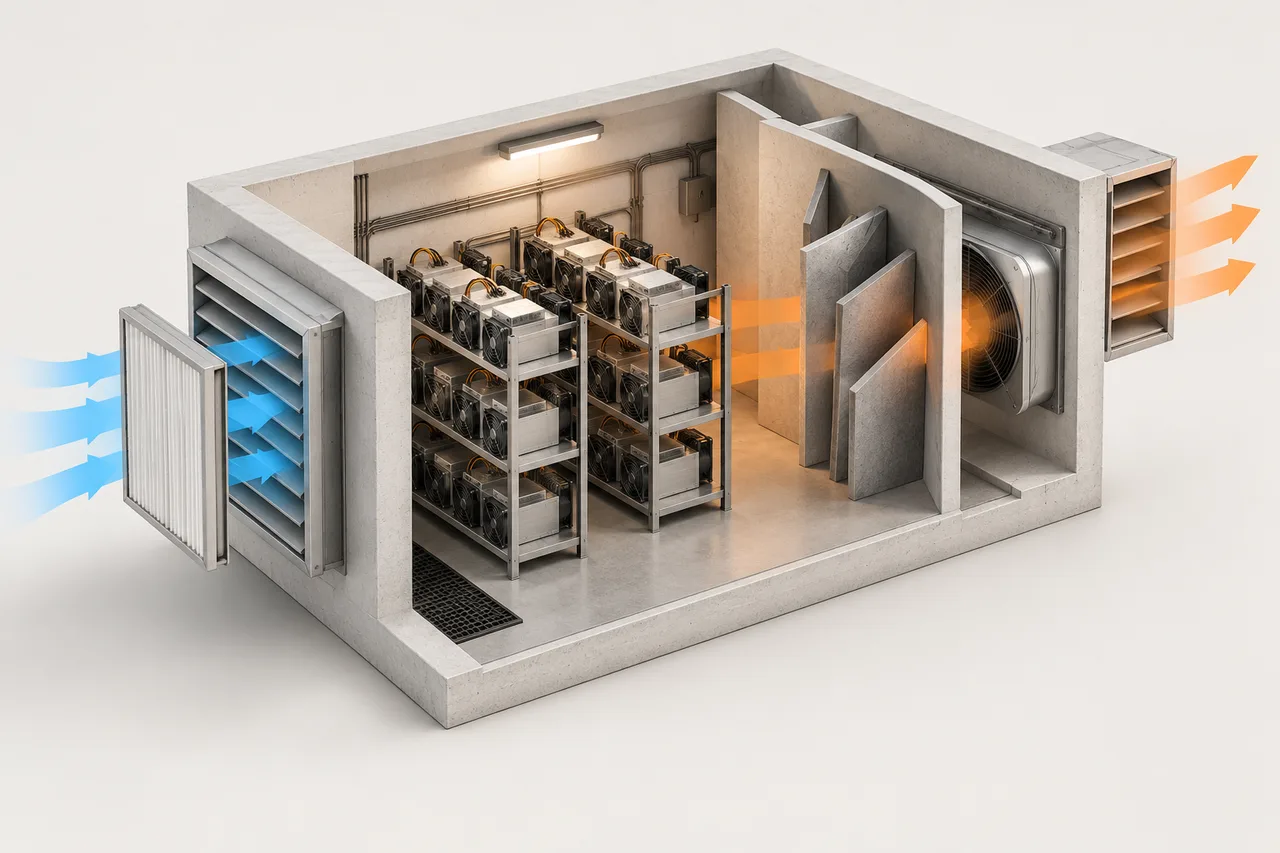
Fans move air across the hardware. The site must admit cooler air and remove heated exhaust without recirculation. Noise, dust and ambient conditions become part of the installation decision. Size ventilation from the actual equipment and site assessment rather than a generic machine count.
Hydro: the miner is one part of a loop
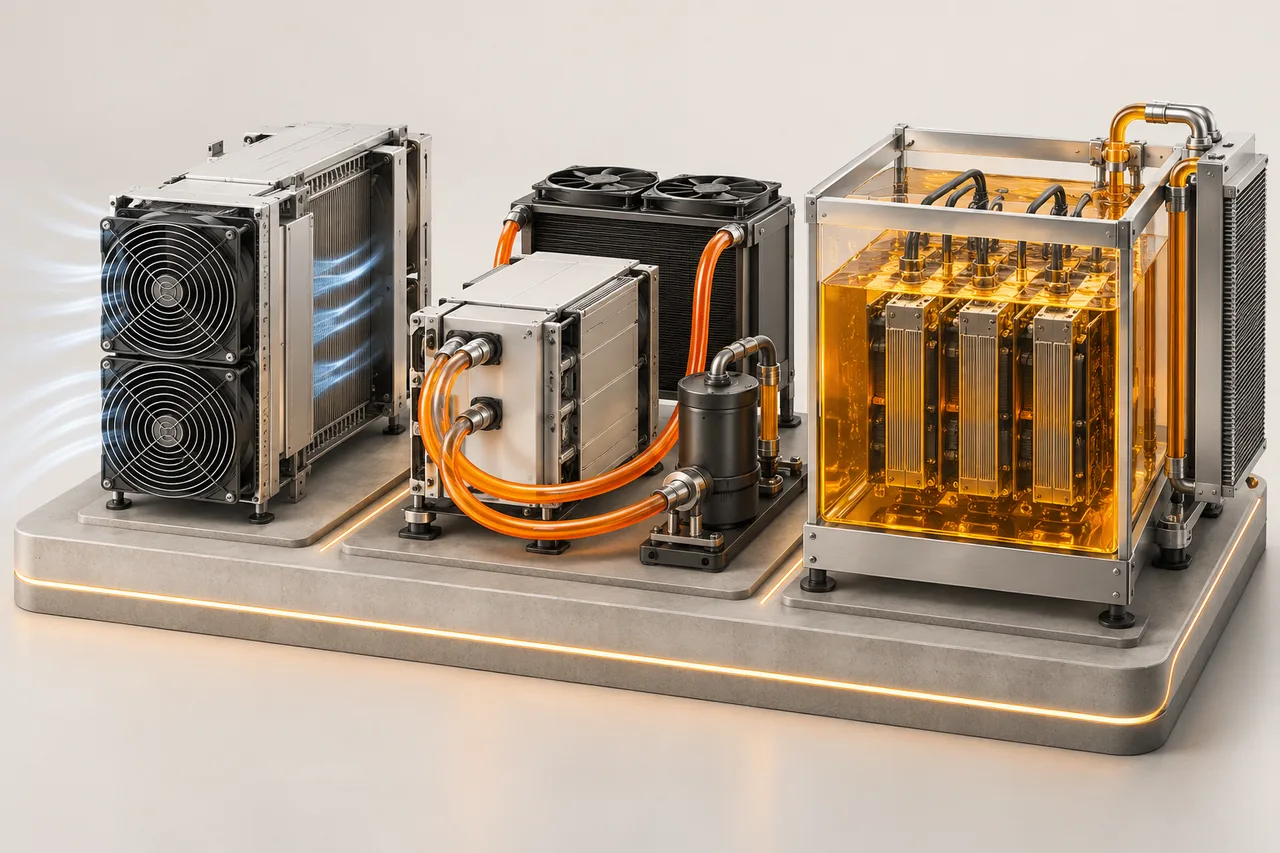
Liquid-cooled hardware needs a compatible circulation and heat-rejection system. Fluid quality, inlet conditions, flow and pressure are model-specific requirements. Pumps and cooling equipment consume electricity too. Use the exact manufacturer manual; the S21 Hyd. guide is one example, not a specification for all hydro miners.
Immersion: check system compatibility
Immersion places compatible equipment in a dielectric fluid and transfers heat to another circuit. Fluid compatibility, service access and warranty terms need written confirmation from the equipment and system suppliers. Do not assume an air-cooled model can be converted without consequences. Treat every conversion as an engineering decision.
Compare the complete heat-removal path
For every option, trace heat from the equipment to the final heat sink. Record what the machine includes, what the site supplies and what requires an additional purchase. This comparison is about system boundaries; actual sizing still depends on the equipment load, environment and the selected operating conditions.
| Approach | Planning focus |
|---|---|
| Air | Intake, exhaust separation, dust and noise |
| Hydro | Compatible liquid loop, circulation and external heat rejection |
| Immersion | Fluid compatibility, tank access and heat exchange |
Define the checks before commissioning
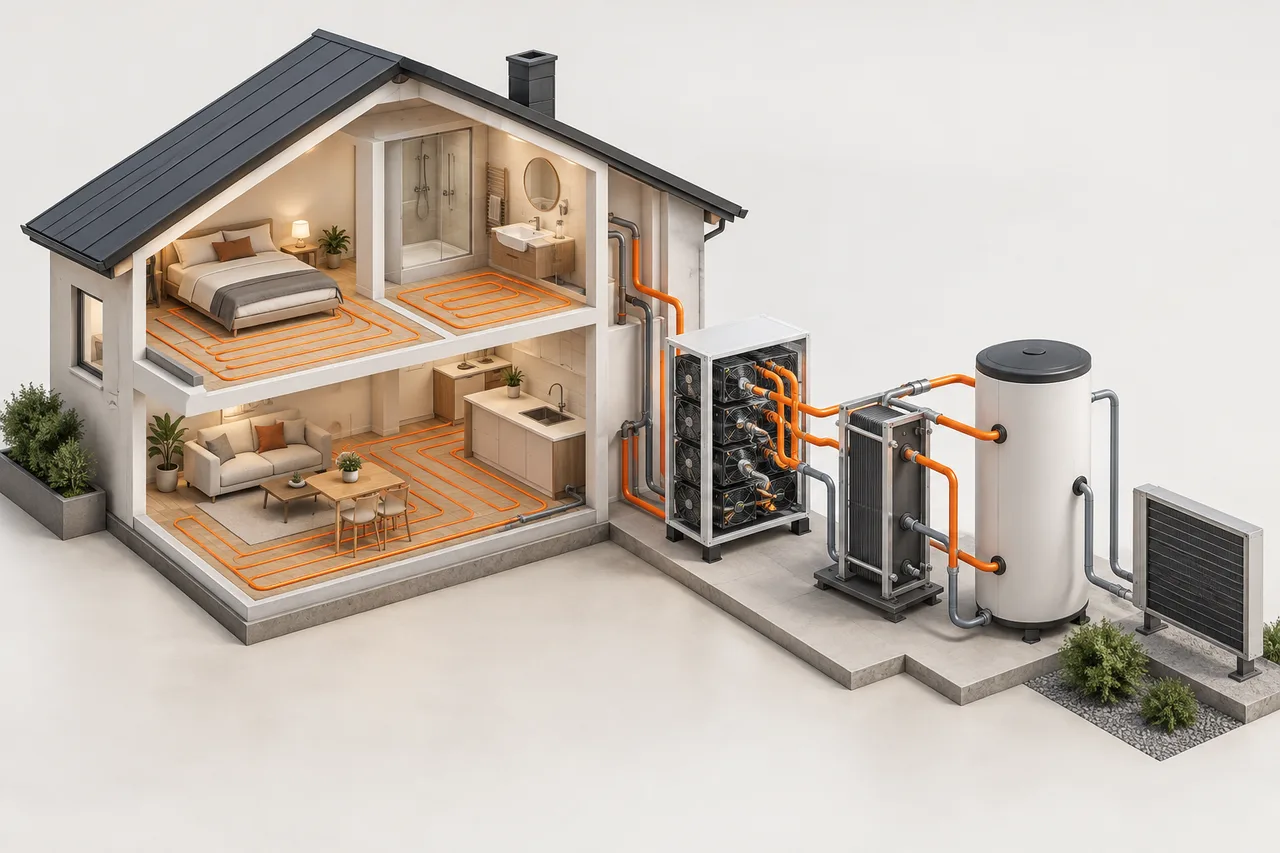
Collect the exact equipment list, operating limits, site conditions and drawings of the proposed interfaces. Ask the system supplier to document startup, shutdown, fault response and maintenance access. During handover, record the measured conditions and outstanding issues against that plan. Keep heating reuse as a separate design question: a useful heat destination must still match its required temperature and schedule.
Compare auxiliary energy and service access
For each cooling proposal, draw the heat path and list every powered component along it. Record which loads are already included in the miner wall-power figure. Then compare service access, consumables, seasonal operation and the consequence of a pump or fan outage. A cooling approach should be selected against the whole operating boundary rather than a single advertised efficiency number.
Ask for a commissioning handover
Keep the approved equipment list, fluid specification where relevant, controls sequence and measured operating conditions together. Assign ownership of alarms and the response to loss of cooling. During acceptance, test the agreed normal and changeover conditions under the responsible team’s procedure. Photographs of an attractive installation are useful context but do not replace those operating records.
Follow the path of the heat.
- INFRASTRUCTURE
- Intake, exhaust and airflow separation
- VERIFY FIRST
- Ambient limits, noise and dust management
System illustration, not an installation drawing. Follow model-specific manuals and engineering assessment.
References
Original documents and further reading. Check the manual for your exact equipment.