
On this page
Describe the heat demand first
Record what needs heat, when it needs it and the required supply and return conditions. A home, process loop and water tank do not have the same demand pattern. Compare seasonal and daily demand with the proposed operating schedule. Matching a heat source by power alone leaves the timing and temperature requirements unresolved.
Keep miner conditions and building conditions distinct
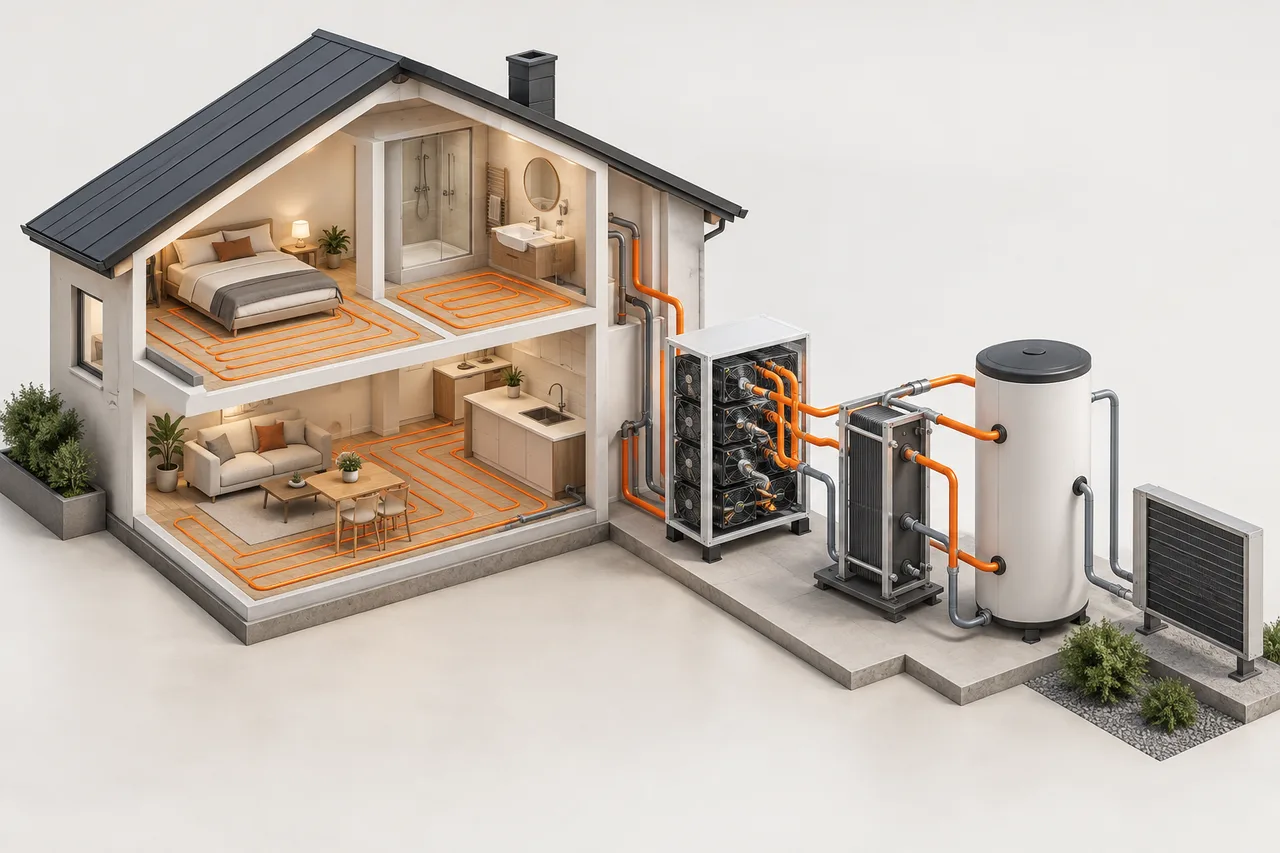
Hydro hardware has model-specific liquid and operating requirements. The building heating loop may use different materials, pressure and water quality. Have the system designer define the interface, heat exchanger, controls and maintenance access. Do not treat a connection sketch as permission to put household water directly through the miner.
Provide a route for unused heat
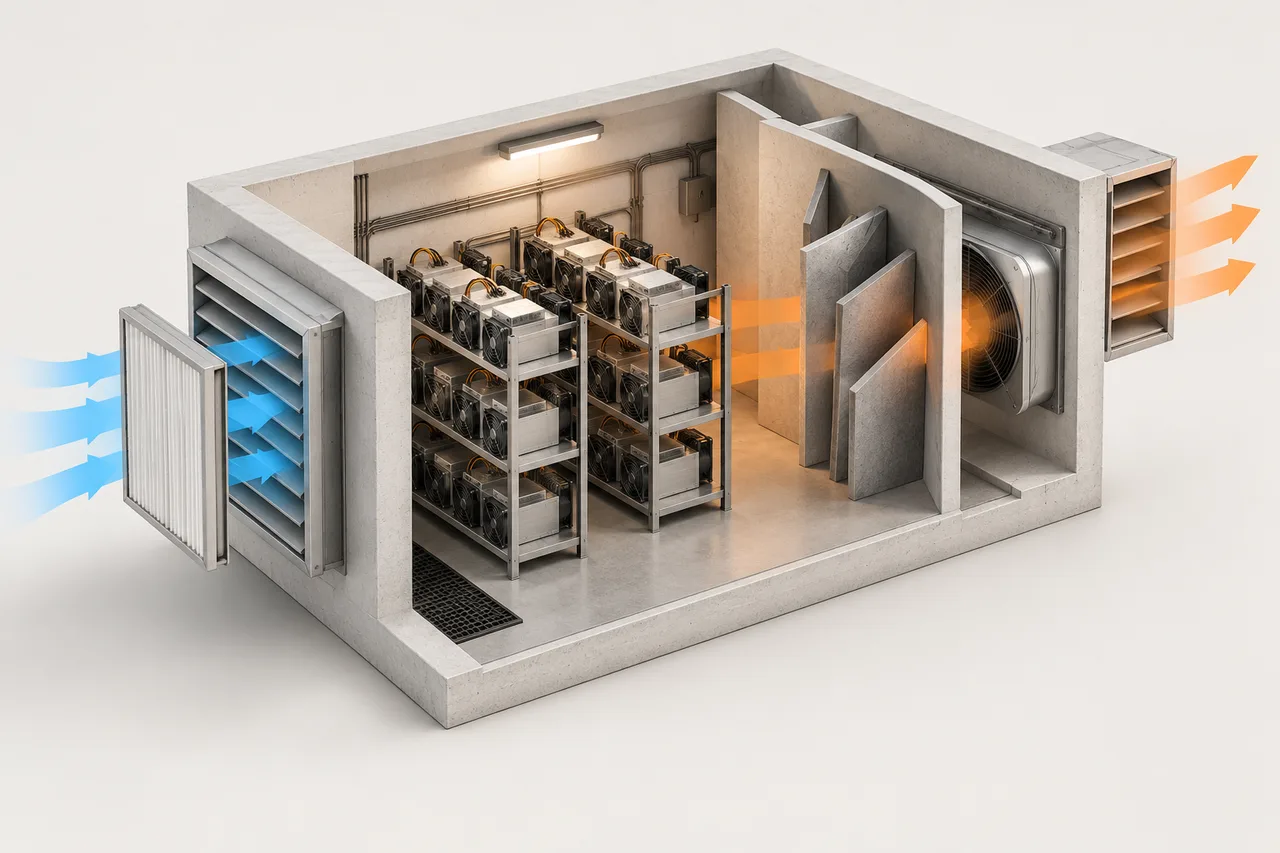
The heat user may stop before the miner does. Define an alternative heat-rejection path or an operating plan for that period. Include how controls respond to a demand change and who checks the changeover. A heating proposal is incomplete if it only shows a winter operating condition and omits warm weather or maintenance.
Evaluate useful heat separately from mining income
Keep miner energy, pumping energy, useful heat delivered and mining receipts as separate quantities. Do not count all electrical input as useful heat saved at the building: distribution losses and mismatched demand matter. Define the measurement points and compare against the heating source actually displaced. Use project measurements to revise the proposal after commissioning.
- Heating demand and operating schedule.
- Required temperatures and connection boundary.
- Non-heating heat rejection and service access.
Work through a demand-limited example
Suppose a hypothetical installation makes 72 kWh of heat available in a day, but the building needs only 30 kWh during matching hours. The useful displacement cannot be assumed to be 72 kWh; distribution and interface losses can reduce it further. Record useful heat at the delivery boundary and keep the remaining heat-rejection requirement in the operating plan.
Test demand changes during commissioning
Define how the system reacts when a heating valve closes, a circulation pump stops or the building demand disappears. The miner cooling requirements still apply during a transition. Have the system team verify the approved control sequence and backup heat-rejection path. Keep the result beside the heating schedule so seasonal changes are an operational plan rather than an improvised response.
References
Original documents and further reading. Check the manual for your exact equipment.