
On this page
Write down who does what
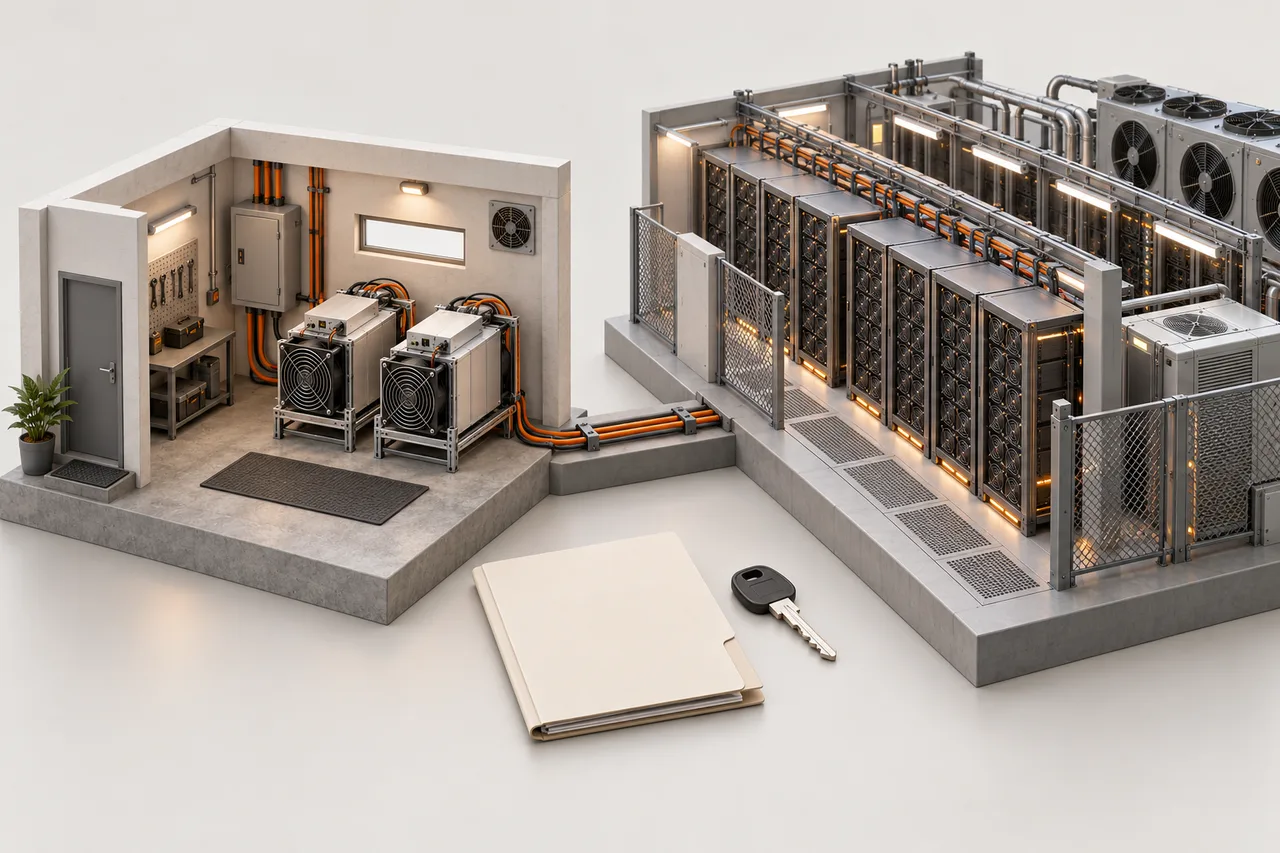
Self-operation and hosting allocate work differently. For each proposal, assign installation, networking, cooling, monitoring, repairs and spare parts to a named party. Mark tasks that are included, optional or not offered. This worksheet is a way to make proposals comparable; the actual scope comes from the signed service documents.
Compare the full billing basis
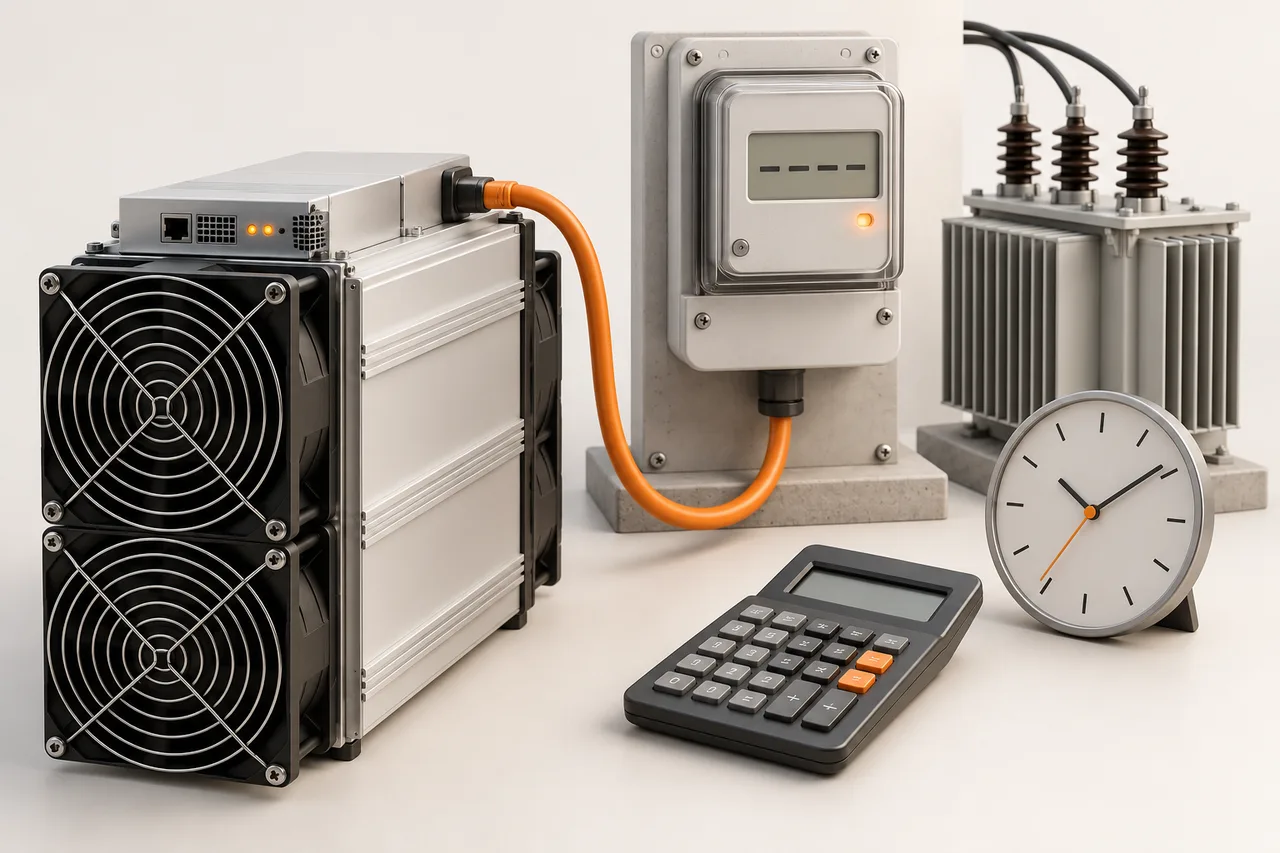
Ask whether power is billed from a machine estimate, a meter or a bundled rate. Then record installation, deposits, minimum commitments, service charges and repair costs separately. Specify how downtime and curtailment affect billing. A proposal with a lower energy line can still have a higher total cost if other charges are outside that line.
- Billing meter and electricity scope.
- One-time charges and recurring charges.
- Downtime, curtailment and repair treatment.
Keep equipment and performance identifiable
Agree how serial numbers map to worker names, how reports are delivered and who controls the pool account and receiving address. Ask for a sample report and a procedure for reporting a discrepancy. Access to a dashboard is useful only if its data can be linked to your equipment and the agreed measurement period.
Discuss repairs and retrieval before delivery
Document authorization for paid repairs, shipping responsibility, storage arrangements and the process for returning equipment. Record service-response expectations and escalation contacts. Compare these provisions alongside cost and available infrastructure. Get jurisdiction-specific contract questions reviewed by an appropriate adviser rather than relying on a general website checklist.
Compare two hypothetical billing structures
For 2,000 kWh in a month, a hypothetical $0.07/kWh offer plus a $30 service fee totals $170. A $0.08/kWh offer with the same service included totals $160. This example ignores other charges and does not describe a market quote. It shows why included scope and the actual billing basis must accompany a headline energy rate.
Reconcile an equipment-level sample
Select one serial number and match its worker, uptime report, maintenance events and billed period. If the report only shows aggregate farm production, ask how your equipment share is identified. Agree how discrepancies are raised and resolved. Repeat the sample after an equipment move or replacement so the link between ownership and reported output remains intact.
References
Original documents and further reading. Check the manual for your exact equipment.