
On this page
Start with energy, then apply the tariff
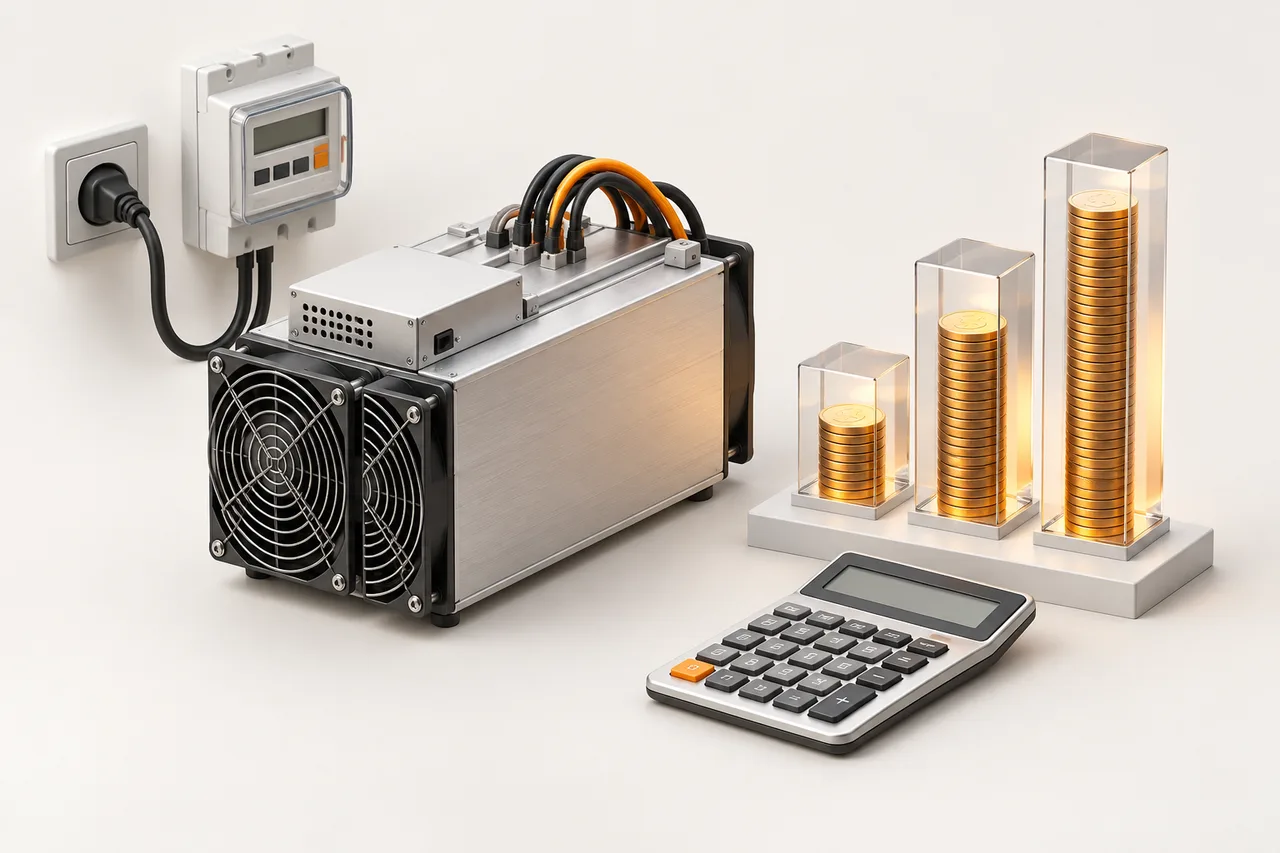
Use measured or documented wall power for the chosen mode. Daily energy is power in kW multiplied by operating hours. For an illustrative 3.5 kW machine running 24 hours, energy is 84 kWh; at USD 0.08/kWh the electricity line is USD 6.72. These are arithmetic inputs, not a current tariff or revenue forecast. For time-of-use pricing, calculate each tariff period separately.
Measure the site boundary
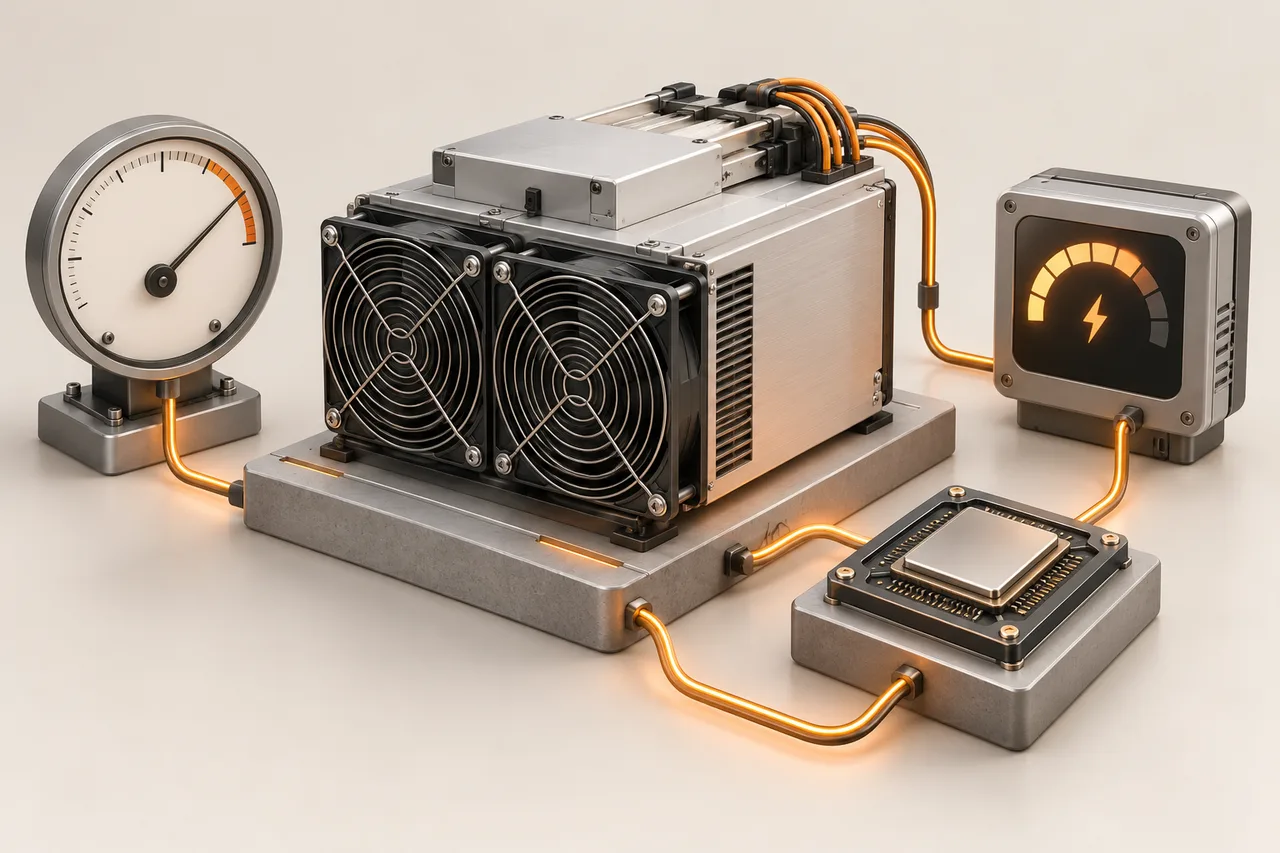
The miner is not the entire electricity bill. Put pumps, exhaust fans, networking and other shared loads in their own rows. State whether a hosting price already includes those loads, otherwise the worksheet can count them twice. If only a site meter is available, document how shared consumption is allocated rather than calling it a machine measurement.
| Cost line | What to record |
|---|---|
| Miner energy | kW, hours and tariff period |
| Shared cooling | Metered use or documented allocation |
| Hosting / service | Included items and separate charges |
| Maintenance | Actual spend and reserve separately |
Separate operating cash flow from payback
Start with pool revenue for a dated observation period and check whether pool fees have already been deducted. Subtract electricity and the other operating lines to get a simplified operating result. Equipment purchase, freight and installation are separate initial outlays. Dividing those outlays by one good day of income assumes that day repeats; it is not a reliable forecast.
Keep a base case and a stress case
Keep one worksheet with your current inputs and another with lower production, fewer operating hours or higher costs. Change one assumption at a time so you can explain the difference. Save the input date and the currency conversion used. Use the results to identify missing information and spending limits, not to label a return as guaranteed.
Reconcile an example day with the meter
A hypothetical 3.5 kW miner running for 20 hours uses 70 kWh before auxiliaries. If separate ventilation uses 4 kWh, the site total is 74 kWh. At $0.08/kWh that is $5.92. If a shared meter reports more, investigate other loads, standby periods and measurement boundaries instead of adjusting the miner specification until the totals happen to match.
Reconcile the billing cycle before forecasting
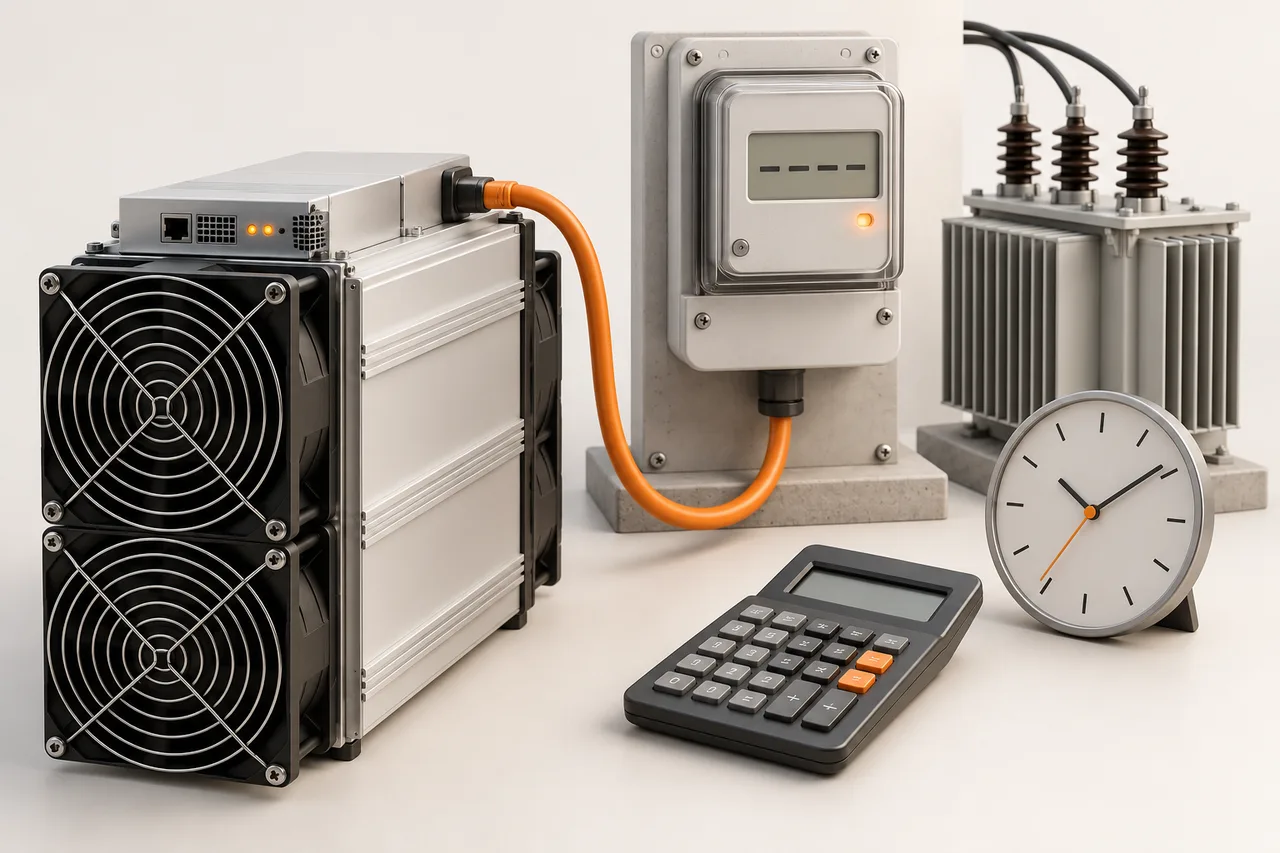
Record opening and closing meter readings, tariff periods and any fixed or capacity-related line items from the actual bill. Match the dates to production records. A calendar-month reward report and a mid-month electricity bill should not be compared without aligning their periods. Keep the original currency and conversion rate when combining costs across locations.
Change one input. See the difference.
Illustrative inputs, not a hardware quote or an income forecast. Add auxiliary equipment separately.
References
Original documents and further reading. Check the manual for your exact equipment.