
On this page
Start with the protocol
The 2008 white paper described a peer-to-peer payment system using proof of work. Bitcoin.org places the first specification and software proof of concept in 2009. These references explain the starting point; they are not evidence for modern hardware performance or returns.
Hardware brings site requirements
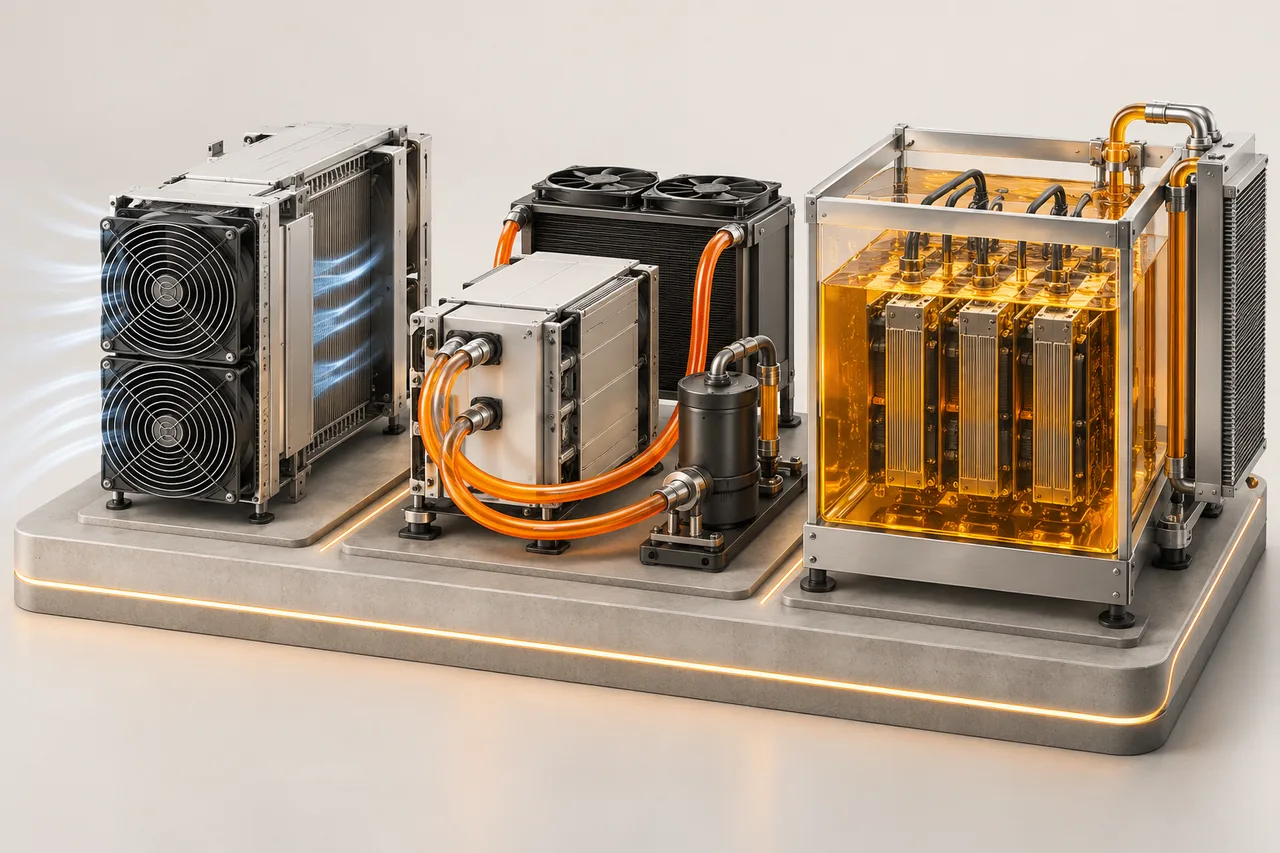
Manufacturer documents make the physical side visible. BITMAIN’s August 2018 S9 Hydro announcement is a dated example of liquid-cooled hardware. The February 2025 S21 Hyd. manual provides a later operating reference. Neither date should be read as the invention date of liquid cooling.
Energy becomes a research subject
The U.S. EIA’s 2024 publication examined how cryptocurrency mining electricity use could be estimated. Read its scope and uncertainty before reusing any numbers. This timeline links the original publication instead of turning a historical estimate into a present-day counter.
Read the timeline as three overlapping changes
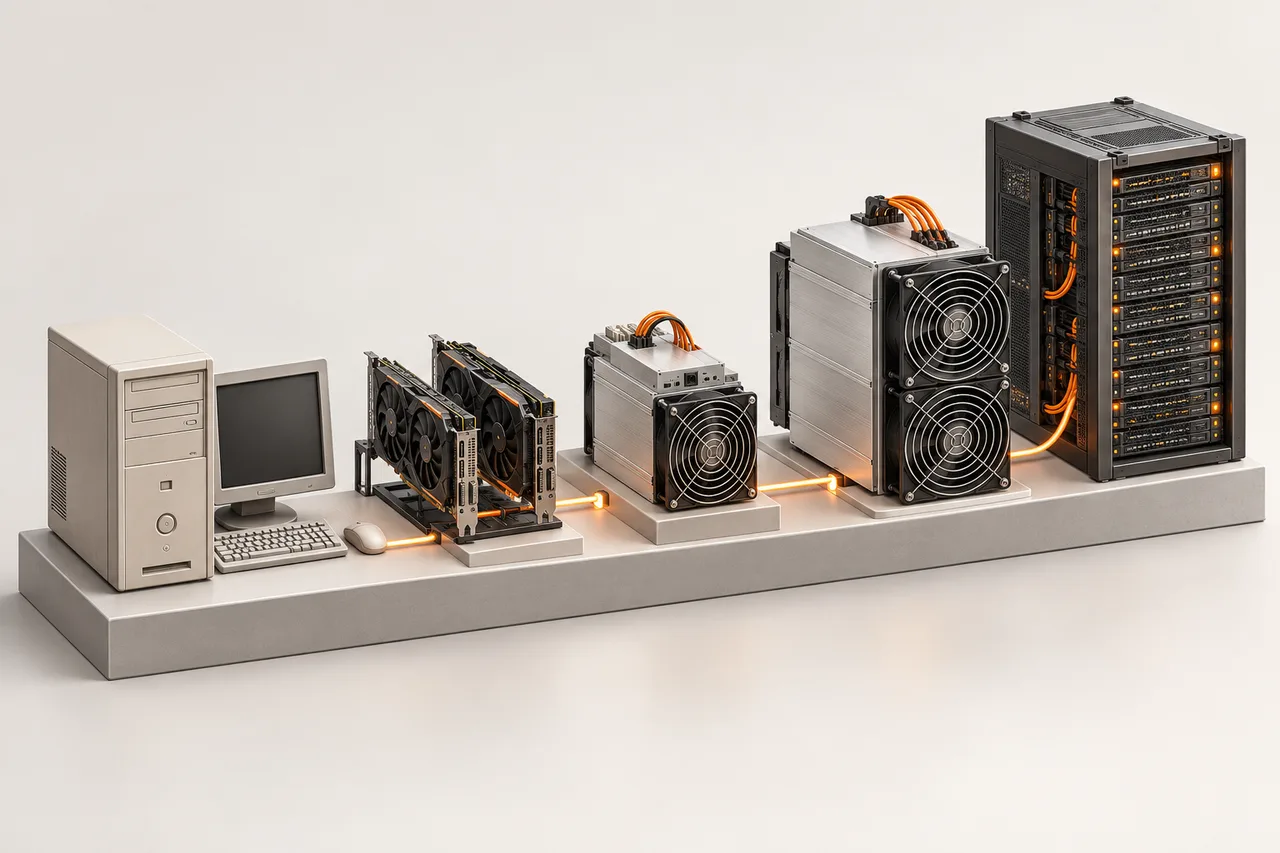
Protocol rules, computing hardware and physical infrastructure evolve on different tracks. An announcement about a new cooling product is evidence of that product, not a protocol change. A network reward event changes issuance rules at a specified height, not the electrical specifications of an existing machine. Keeping the layers separate makes historical comparisons more accurate.
Compare old specifications in their original context
When comparing generations, preserve algorithm, mode, power-measurement boundary and publication date. A historical purchase price cannot be combined with today’s network revenue to describe what an operator actually earned in the past. Reconstruct a dated scenario with contemporaneous inputs, or clearly label the exercise as a present-day comparison of older hardware.
Move through the milestones.
The white paper
A proposal for peer-to-peer electronic cash and proof of work.
Read the original source ↗References
Original documents and further reading. Check the manual for your exact equipment.