


Bitcoin mining is usually discussed as an electrical load, yet every ASIC also behaves as a steady heat source. In a conventional air-cooled room, that thermal output is treated as a problem and exhausted outdoors. In a heat-reuse design, the same output is captured by a hydronic loop and delivered to space heating, domestic hot-water preheating, a greenhouse, a pool or a shared thermal network. The important shift is not that mining uses less electricity; it is that one electrical input supports two useful services: SHA-256 computation and heat.
This guide explains where the heat comes from, how a home or building can use it, what must be measured before equipment is selected, and where the economics can break down. For packaged residential options, see LeedMiner's Home Heating Mining systems. For larger modular deployments, compare the broader container solutions range.
Why ASIC mining produces reusable heat
An ASIC converts electrical energy into computation, but the electrical input ultimately leaves the chips, power supplies and coolant as heat. The International Energy Agency notes that nearly all electricity consumed by data centers becomes usable heat, while the recoverable share depends on the cooling system and the temperature required by the heat user. The same thermodynamic principle applies to a compact mining system: the design task is to move heat from the miner to a useful load with acceptable pumping, heat-exchanger and control losses.
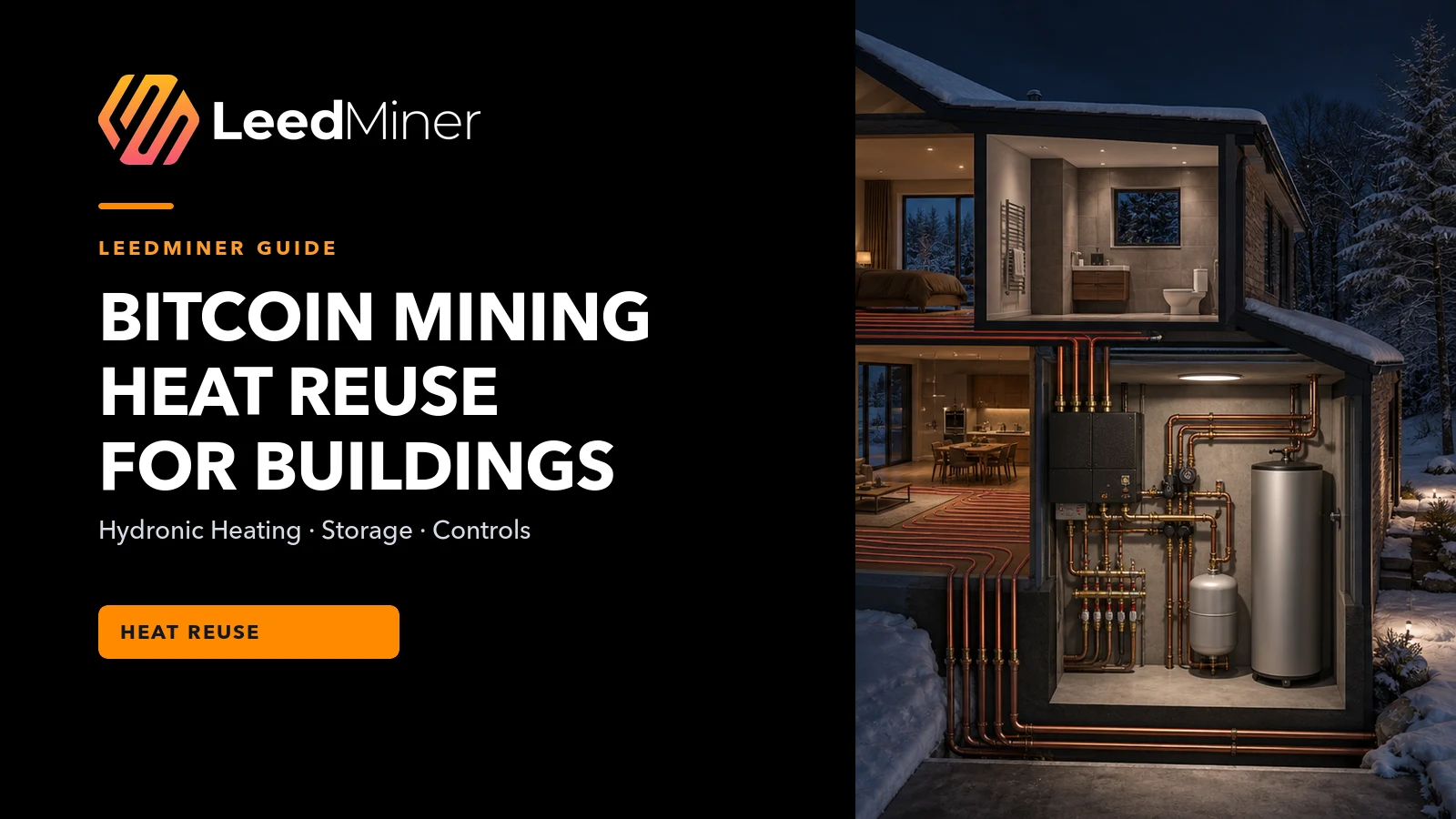
Hydro-cooled miners simplify that transfer because heat is already carried in liquid rather than dispersed into room air. A primary miner loop can be isolated from the building loop by a plate heat exchanger. The building side can then feed radiant floors, fan coils, a buffer tank or a domestic hot-water preheat tank. Isolation protects the miner's required coolant chemistry and flow conditions while letting the building use standard hydronic components.
The recovered heat should be treated as a controllable by-product, not as guaranteed free heating. Mining revenue, network difficulty, electricity tariffs, outdoor temperature and the building heat load all change over time. A sound design therefore works safely when mining is reduced or stopped and can reject surplus heat when the building does not need it.
Match mining power to the building heat load
The first sizing rule is simple: electrical input is approximately the upper limit of continuous thermal output. A miner drawing 7.4 kW can provide roughly that order of heat before distribution losses. That does not mean every house should install a 7.4 kW mining load. The correct input is the building's design heat loss, its shoulder-season demand and the hours when heat is useful.
Start with a professional heat-loss calculation rather than floor area alone. Include insulation, glazing, infiltration, local design temperature and the desired indoor set point. Then compare that hourly load with the miner's minimum and maximum operating modes. If the mining system is larger than the heat load, add a buffer tank, a secondary heat use or a dry cooler. If it is smaller, retain a backup heat source for design-day peaks.
Seasonal mismatch is the central planning issue. A home may need steady heat in winter and very little in summer, while mining economics may favor year-round operation. The IEA's analysis of recovered heat emphasizes proximity, temperature level and timing of demand. Those three factors matter more than a headline recovery percentage. Short pipe runs, low-temperature emitters and a predictable year-round load improve utilization.
For electricity-cost sensitivity, use the Bitcoin mining electricity cost guide and test the exact miner in the profitability calculator. Heating value should be modeled separately from mining revenue so the business case does not count the same benefit twice.
Hydronic architecture: loops, exchanger and storage
A robust residential system normally has two liquid circuits. The miner circuit maintains the manufacturer's required inlet temperature, pressure, flow and water quality. A plate heat exchanger transfers energy to the building circuit without mixing fluids. The building circuit contains its own pump, expansion vessel, air separator, pressure relief, sensors and controls.
A buffer tank decouples instantaneous miner output from variable room demand. The U.S. Department of Energy describes thermal energy storage as heat reserved for later use, from hours to weeks, and notes that it can balance supply and demand while avoiding unnecessary energy conversions. In a home mining system, a practical hot-water buffer usually covers minutes or hours rather than seasonal storage, but the control principle is the same.
Controls should monitor miner inlet and outlet temperatures, flow, tank temperature, building supply temperature and outdoor conditions. A three-way valve or variable-speed pump can prevent cold return water from stressing equipment. A high-temperature limit should reduce mining power or divert heat to a dry cooler. Freeze protection, leak detection and automatic shutdown logic are essential for unattended operation.
Domestic hot water requires special treatment. The mining loop should not directly contact potable water. Use an approved indirect tank or heat exchanger, maintain required sanitation temperatures with a conventional heater, and follow local plumbing and electrical codes.
Economics and the value of recovered heat
The most useful comparison is not “mining heater versus no heater.” Compare complete systems: electricity consumed, mining income, displaced heating energy, pumps, fans, maintenance, backup heating and capital cost. A resistance heater has a coefficient of performance near one at the point of use. A heat pump can deliver more heat per unit of electricity, so recovered mining heat is most compelling when the computation itself has value and the heat would otherwise be rejected.
A 2026 building-energy study modeled cryptocurrency miners as both flexible electrical loads and controllable thermal resources, coordinating them with renewables, heat storage and other building loads. The result supports a systems approach rather than a simple appliance comparison. The paper is useful evidence that scheduling and heat recovery can improve whole-building performance, but its modeled results are not a guaranteed outcome for a particular house.
Use three ledgers in the financial model: mining cash flow, avoided heating cost and system operating cost. Apply conservative uptime, difficulty and heat-utilization assumptions. If the design only works when every hour of heat is used and mining revenue remains constant, the margin is too fragile.
Equipment example for a hydro loop
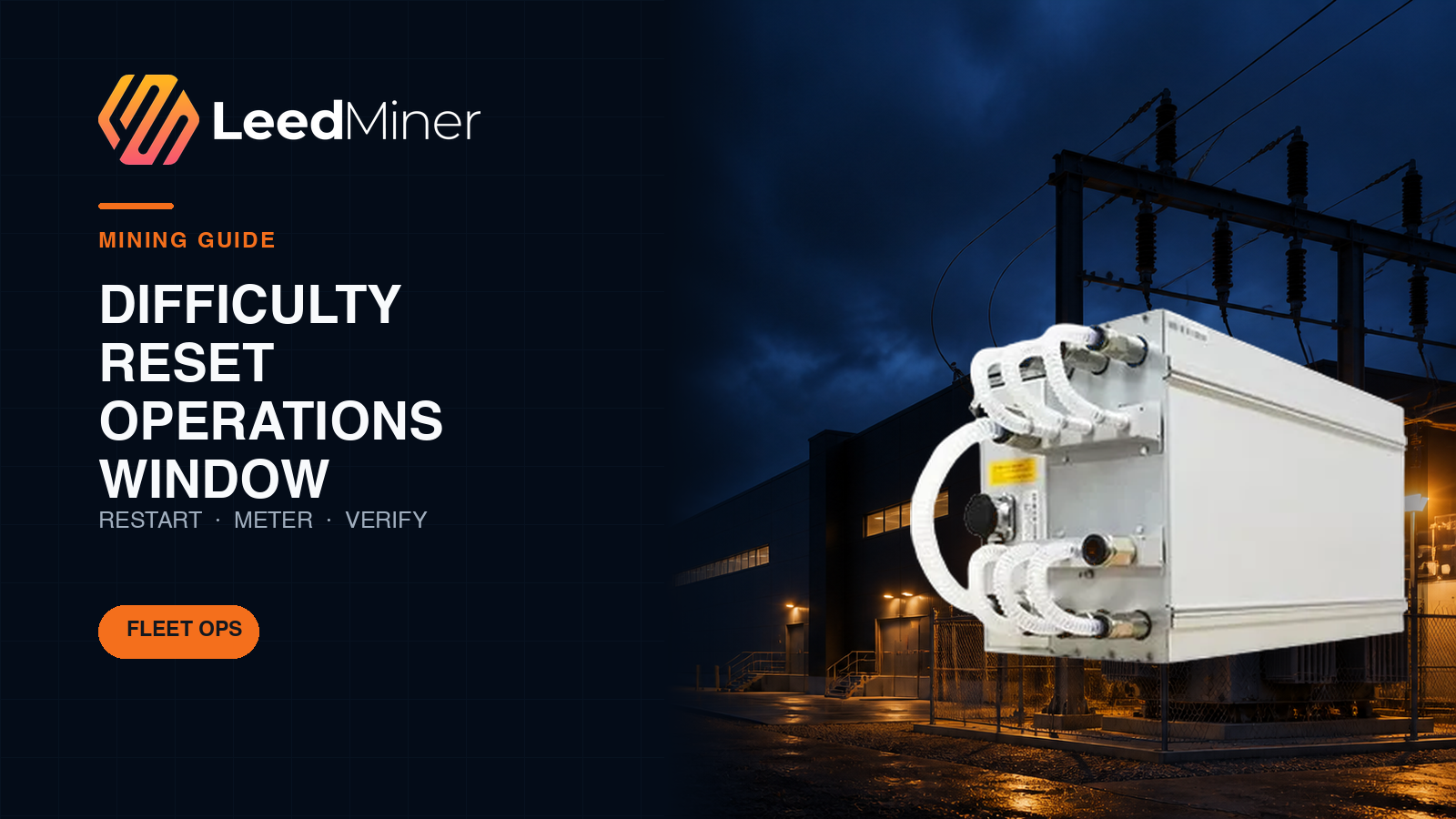
This model illustrates why miner selection must consider thermal output as well as hashrate. Its electrical draw defines a substantial continuous heat source, so the building loop, heat exchanger and heat rejection path must be sized for the full operating mode. The product card is an equipment reference, not a promise that one configuration fits every property.
Commissioning checklist
- Obtain a room-by-room design heat-loss calculation.
- Confirm electrical service, phase, voltage, protection and local permitting.
- Verify the miner's approved coolant, flow and temperature envelope.
- Size the plate heat exchanger for full output with realistic approach temperatures.
- Provide a buffer tank or another controlled heat sink.
- Keep backup heat and emergency heat rejection available.
- Log temperatures, flow, power and recovered heat after commissioning.
- Recheck the economics with current network and tariff data.
For a practical system layout and package discussion, continue with How to Design a Home Heating Mining System. For the broader energy-system view, read From Waste Heat to Circular Energy.