


SUMMARY
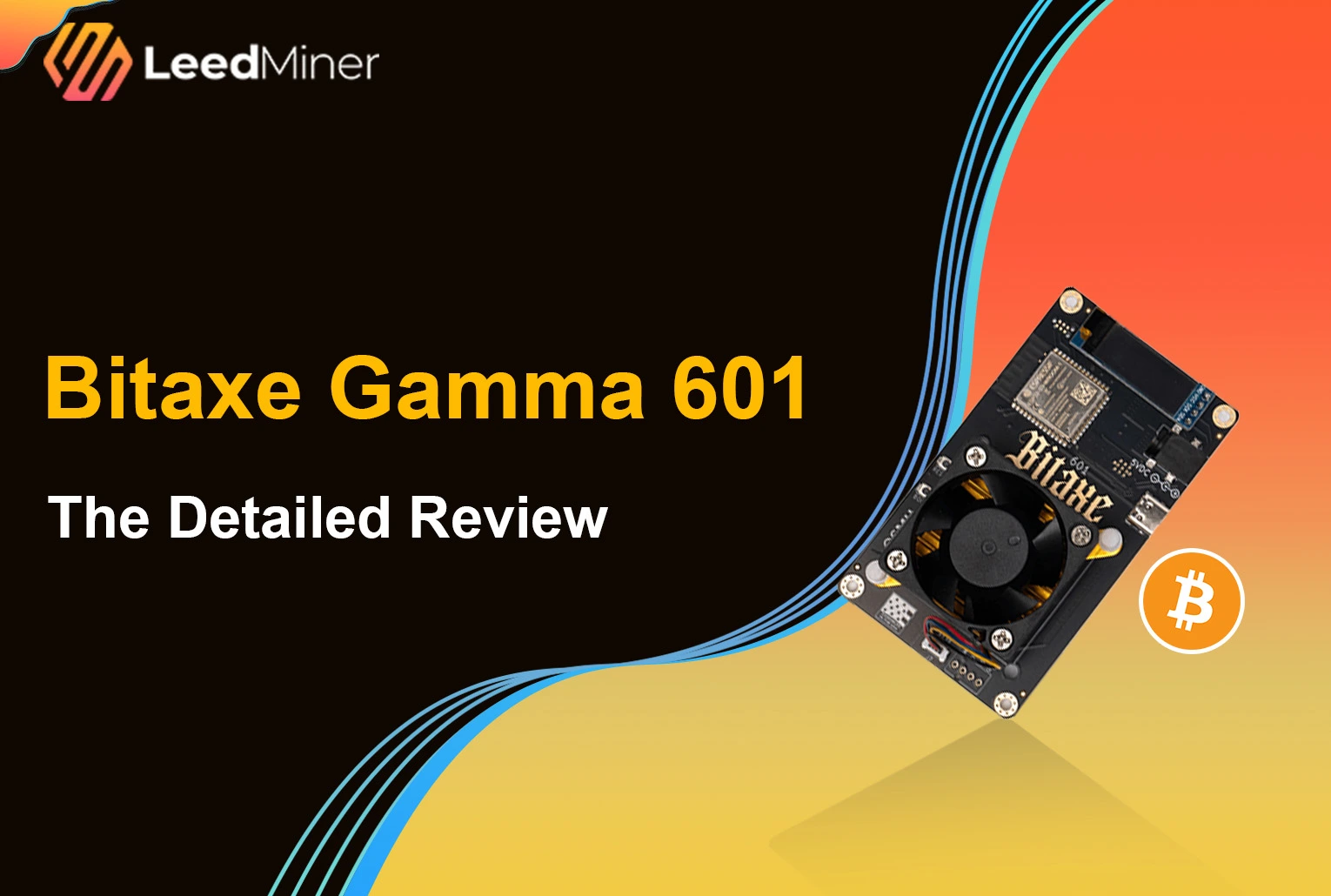
The Bitaxe Gamma 601 is a compact, ultra-efficient SOLO Bitcoin miner designed with one powerful principle at its core: open source. Unlike traditional closed mining hardware, Bitaxe invites makers, developers, and crypto enthusiasts to dive into Bitcoin mining through a fully transparent and modifiable platform. In this article, we’ll compare the efficiency and performance of the Bitaxe Gamma 601 against other popular SOLO miners, such as the NerdMiner NerdQaxe series, Lucky Miner LV07, and Canaan’s Nano family. We’ll also explore the open-source advantage of Bitaxe, its role in fostering innovation, and what the future might hold for this community-powered mining movement. Whether you’re a DIY tinkerer, a seasoned miner, or just crypto-curious—this is your gateway to the SOLO mining revolution.
Technical Specifications

| Manufacturer | Bitaxe |
|---|---|
| Model | Gamma 601 |
| Also known as | Bitaxe 601 Gamma |
| Release | Aug 2024 |
| Size | 10 x 6 x 5mm |
| Weight | 0.34kg |
| Chip name | BM1370 |
| Chip count | 1 |
| Noise level | 35dB |
| Fan(s) | 1 |
| Power | 17W |
| Interface | WiFi |
| Temperature | 5 – 45 °C |
| Humidity | 5 – 95 % |
| Additional info | Educational or Solo mining device. |
Meet the Bitaxe Gamma 601
1. A Miner That Embodies the Bitcoin Ethos
The Bitaxe Gamma 601 is a fully open-source Bitcoin ASIC miner, designed to support decentralization in Bitcoin mining. Developed by the community at Open Source Miners United (OSMU), it marks the fifth major version of the Bitaxe project — and it’s more powerful, more accessible, and more user-friendly than ever. Its core upgrade?The BM1370 5nm ASIC chip — the same chip used in Bitmain’s flagship Antminer S21 Pro — delivering high performance at ultra-low power consumption. This compact miner was created with clear goals in mind:
- Simplicity: Just plug in power and start mining via Wi-Fi — no external PC required.
- Practical for Home Use: Low noise, low cost, low power usage, and minimal maintenance.
- ASIC Power: Based on state-of-the-art Bitcoin ASIC technology for excellent efficiency and hashing capability.
- Versatile & Hackable: Mine on any StratumV1-compatible pool, solo mine, lottery mine — or customize and hack it to do whatever you want.
- Bitcoin Spirit: Fully open-source, permissionless, and decentralized — embracing the philosophy of sovereign money.

In essence, the Bitaxe Gamma 601 isn’t just a miner — it’s a statement. A device that brings mining back into the hands of individuals. For the first time, you don’t need to be a large corporation to build or run a real Bitcoin ASIC miner. You can even build one yourself using open-source designs available on GitHub, or simply buy a ready-to-use unit and plug it in.
2. Hardware Overview: Tiny but Powerful
Despite its palm-sized footprint, the Bitaxe Gamma 601 packs serious specs:
- ASIC Chip: BM1370 (same as Antminer S21 Pro)
- Hashrate: 1.2 TH/s
- Power Draw: 15W at the chip level
- Noise: Ultra-quiet, suitable for desktops, homes, or small offices
- Connectivity: Wi-Fi configuration — no Ethernet cable required
- Firmware: Runs on open-source AxeOS with on-device screen, adjustable frequency, and remote monitoring
- Power Supply: Uses a dedicated power adapter (not USB-C)
- USB-C Port: For firmware flashing and developer access — not for power

Comparing Bitaxe Gamma 601 with Other Top SOLO Miners
In the world of Bitcoin SOLO mining, the Bitaxe Gamma 601 stands out as one of the most efficient open-source mining devices. However, it’s not alone—there are several other SOLO miners worth comparing. Let’s take a look at power efficiency across the most popular models.
Efficiency Comparison (Joules per Gigahash)

Lower efficiency value (J/Gh) is better – it means less power is used per unit of hashing power.
Open Source Champions: Bitaxe & NerdMiner Series
The Bitaxe Gamma 601 is a fully open-source SOLO miner. Its compact size and ultra-low power usage make it perfect for hobbyists and home miners. Closely related are the NerdMiner NerdQaxe series, which can be seen as upgraded versions of Bitaxe:
- Higher hashrates (up to 4.8 Th/s)
- Balanced power consumption and great efficiency
- Entirely DIY-capable using open-source files on GitHub
- Ready-to-use versions are also available for convenience
SOLO-Focused Brand: Lucky Miner
Lucky Miner is a dedicated manufacturer of SOLO mining machines. Devices like the
LV08
are built specifically for BTC SOLO miners:- Competitive hashrates (1 Th/s and above)
- Compact and user-friendly for home use
- A brand that understands the SOLO miner experience
Home Mining + Heating: Canaan Nano Series
Canaan has also joined the SOLO mining trend with
Avalon Nano 3
andNano 3S –
hybrid devices designed for both mining and home heating:- Nano 3S: High performance (6Th/s at 140W)
- Nano 3: Beginner-friendly (4Th/s at same power)
- Designed for home users and small-scale miners, combining comfort with mining functionality
Top SOLO Bitcoin Miners Comparison

Future Perspective of Goldshell Byte
The Bitaxe Gamma 601 represents more than just a piece of hardware—it embodies a movement. As a fully open-source SOLO miner, it invites everyone—from hobbyists to professional developers—to participate in and contribute to the world of Bitcoin mining.
Open Source is Open Innovation
The open-source nature of Bitaxe Gamma 601 means that anyone can build it, anyone can improve it, and anyone can benefit from it. Manufacturers can mass-produce ready-made devices for convenience, while makers and tech enthusiasts can enjoy the hands-on experience of assembling and modifying their own units. This openness fosters:
- Community collaboration
- Faster innovation cycles
- Greater accessibility to mining for all
Bitaxe isn’t locked behind patents or proprietary software—it’s a platform for learning, creating, and experimenting.
A Gateway to Crypto Mining
For many users, Bitaxe is not just about profit, but about exploration:
- It serves as an ideal entry point for those curious about blockchain and mining technology.
- Its simplicity and low power requirements make it non-intimidating for beginners.
- It encourages technical education and DIY skills, inviting more people to engage with the world of decentralized finance in a tangible way.
What’s Next ?
Because the design is open, we can expect:
- New derivatives and improved versions to emerge from the community
- Hardware upgrades tailored to specific needs (e.g., higher efficiency, wireless control, compact form factors)
- Integration into broader ecosystems such as home automation, energy optimization, or mesh mining networks
In essence, Bitaxe Gamma 601 might be just the beginning—a foundational stepping stone toward a new wave of open hardware innovation in crypto. As more creators and builders embrace open-source mining, the Bitaxe project could become the Arduino or Raspberry Pi of the mining world—small, smart, and infinitely hackable.