


SUMMARY
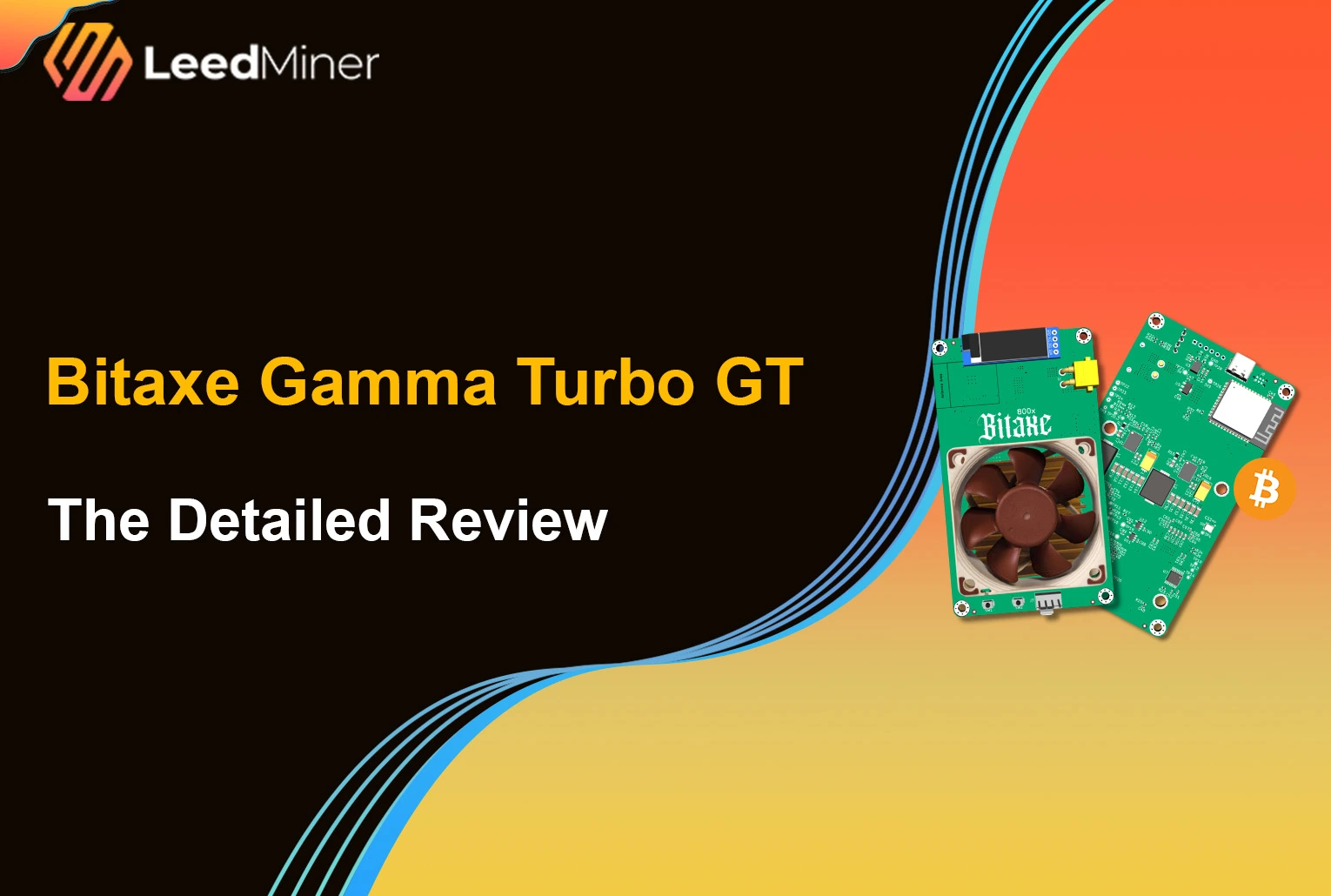
The Bitaxe Gamma Turbo GT is the final and most powerful evolution of the Bitaxe project: a compact, ultra-efficient SOLO Bitcoin miner — now featuring dual BM1370 ASIC chips for over 2 TH/s of mining power. At its core remains the same principle that has always defined Bitaxe: open-source freedom. Unlike traditional closed mining hardware, Bitaxe invites makers, developers, and crypto enthusiasts to dive into Bitcoin mining through a fully transparent and modifiable platform. In this article, we’ll compare the performance and efficiency of the Bitaxe Gamma Turbo GT against other SOLO miners, such as the NerdMiner NerdQaxe series, Lucky Miner LV07, and Canaan’s Nano family. We’ll also explore how Bitaxe’s open-source model fuels innovation and why Gamma Turbo is a major leap forward for the SOLO mining movement. Whether you’re a DIY tinkerer, a seasoned miner, or simply crypto-curious — this is your gateway to the next generation of SOLO mining.
Technical Specifications

| Manufacturer | Bitaxe |
|---|---|
| Model | Gamma Turbo GT (Gamma GT) |
| Also known as | Bitaxe GT |
| Release | Planned May 2025 |
| Size | 12 x 6 x 5 cm |
| Weight | 0.4 kg |
| Chip name | 2x BM1370 |
| Chip count | 2 |
| Noise level | ~35dB (Noctua NF-A6x25 Fan) |
| Fan(s) | 1x Noctua NF-A6x25 PWM Fan |
| Power | Approx. 30-35W |
| Interface | WiFi |
| Temperature | 5 – 45 °C |
| Humidity | 5 – 95 % |
| Additional info | Open-source, Solo mining device |
Meet the Bitaxe Gamma Turbo GT
1. The Ultimate Bitaxe Evolution
The Bitaxe Gamma Turbo GT is the final and most powerful version of the Bitaxe series. Developed by @skot9000 and the Open Source Miners United (OSMU) community, it combines maximum solo mining power with the beloved open-source spirit. Its standout upgrade? Dual BM1370 ASIC chips — delivering a combined hashrate of 2.0 to 2.2 TH/s while maintaining low energy consumption. This compact miner was designed with clear goals:
- Maximum Performance: Over 2 TH/s hashpower on a single board.
- Simplicity: Plug in 12V power and mine via Wi-Fi — no PC needed.
- Open & Hackable: Full access to hardware and firmware customization.
- Quiet Operation: Noctua cooling ensures ultra-low noise.
- Bitcoin Spirit: Fully open-source, decentralized, and accessible.
You can either build one yourself when files are released on GitHub — or purchase ready-to-run models after launch.
2. Hardware Overview: Double the Power, Same Size
Despite its palm-sized footprint, the Bitaxe Gamma Turbo GT packs serious hardware:
- ASIC Chips: 2x BM1370 (from Antminer S21 Pro)
- Hashrate: 2.0 – 2.2 TH/s
- Power Draw: ~30W total
- Cooling: Aluminum heatsink + Noctua NF-A6x25 high-performance fan
- Connectivity: Wi-Fi based, no Ethernet needed
- Firmware: Runs AxeOS, open-source and highly customizable
- Form Factor: 120mm x 60mm PCB, compact and portable
It’s an incredible achievement: true high-end Bitcoin mining performance, accessible for small-scale users and hobbyists alike.
Comparing Bitaxe Gamma Turbo GT with Other Top SOLO Miners
Open Source Champions: Bitaxe & NerdMiner Series
The Bitaxe Gamma Turbo GT leads the charge with open-source hardware and firmware, offering serious mining power at low energy costs. In comparison, the NerdMiner NerdQaxe series also stays true to open-source values:
- Up to 4.8 TH/s models
- DIY-focused with GitHub support
- Balanced power and efficiency
SOLO-Focused Brand: Lucky Miner
Lucky Miner’s SOLO models (e.g., LV08) are great for private miners:
- Competitive hashrates (4.5Th/s+)
- Built specifically for SOLO mining setups
- Closed source but user-friendly
Home Mining + Heating: Canaan Nano Series
The Avalon Nano 3/3S mixes mining and home heating:
Summary Table

Future Perspective of Bitaxe Gamma Turbo GT
The Bitaxe Gamma Turbo GT isn’t just a device — it’s the culmination of years of community-driven innovation.
Open-Source = Open Innovation
With complete access to hardware schematics and firmware source code, Bitaxe GT enables:
- Rapid community innovation
- Customized upgrades and mods
- Affordable access to cutting-edge Bitcoin mining
This is mining the way Bitcoin intended: decentralized and permissionless.
Gateway to Professional Solo Mining
Bitaxe GT shifts SOLO mining from an experiment to a serious home mining opportunity:
- High hashrate from a compact device
- Minimal power costs (~30W)
- Direct block rewards to your own Bitcoin wallet
- Easy enough for advanced hobbyists and accessible enough for ambitious beginners
As more Bitaxe variants and custom forks appear, expect innovations like:
- Higher TH/s versions
- Mesh-networked decentralized miners
- Solar/battery powered setups
- Fully integrated smart home mining systems
Bitaxe Gamma Turbo GT could become the Raspberry Pi of Bitcoin mining: small, mighty, and massively hackable.