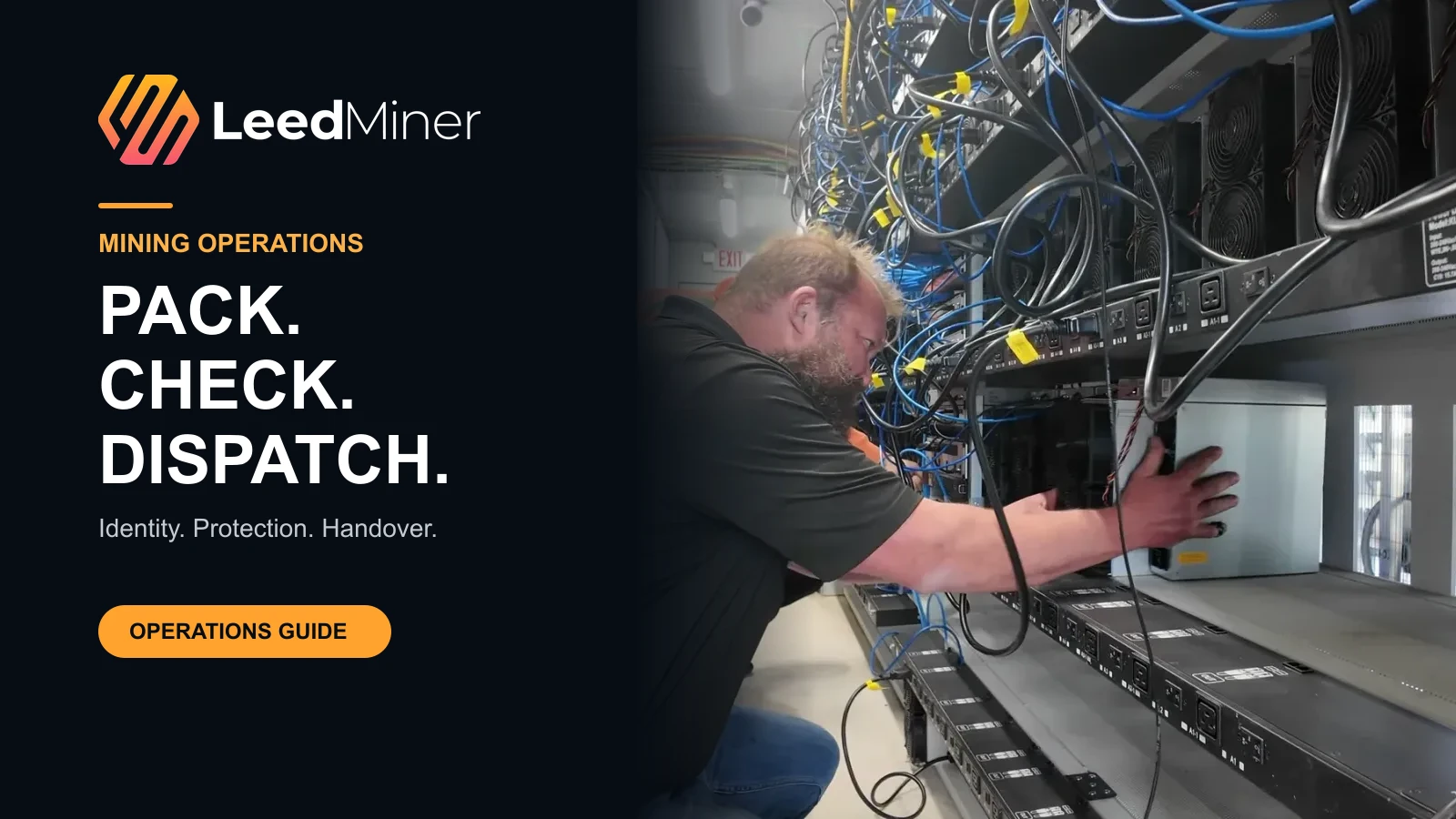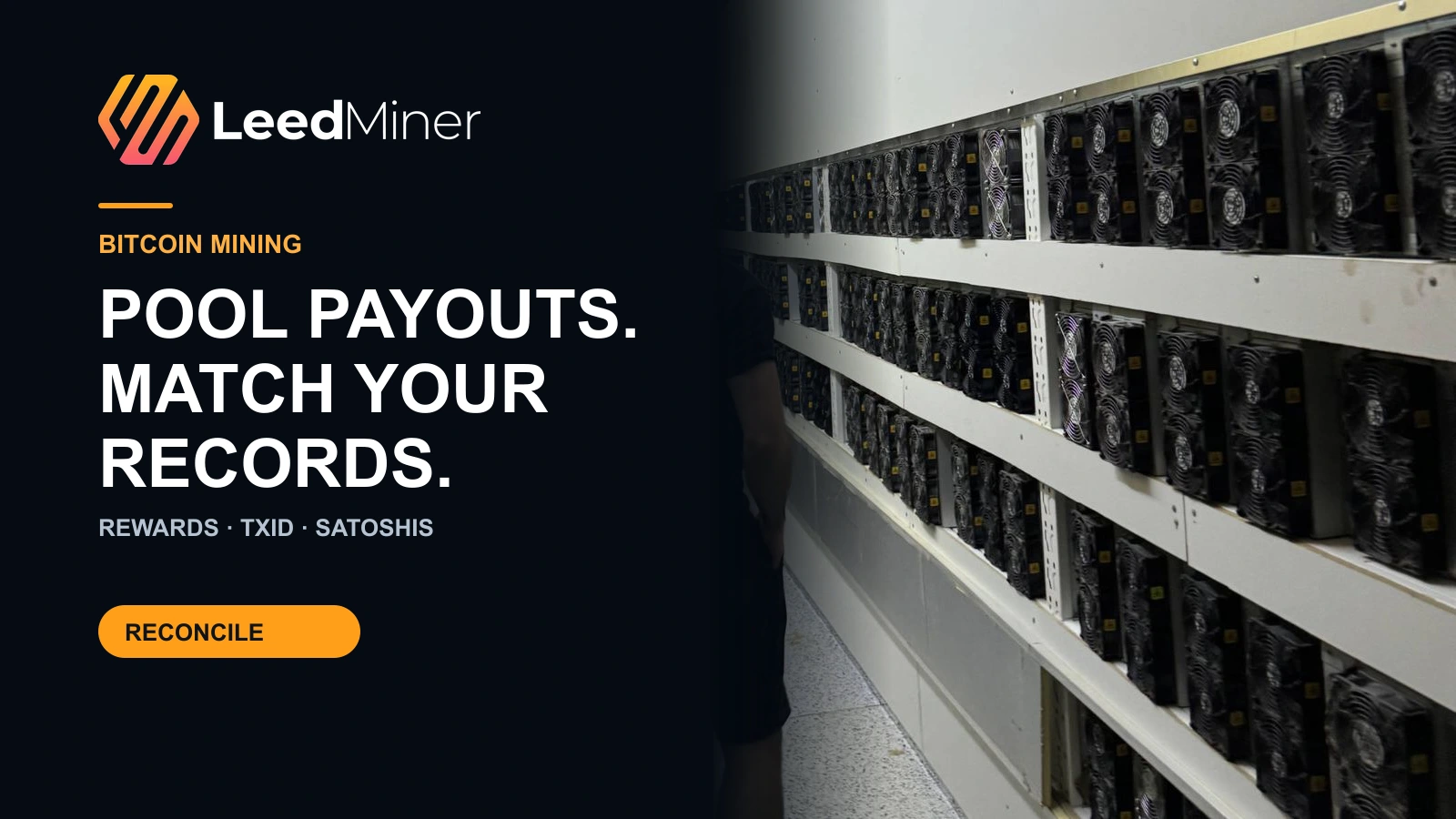



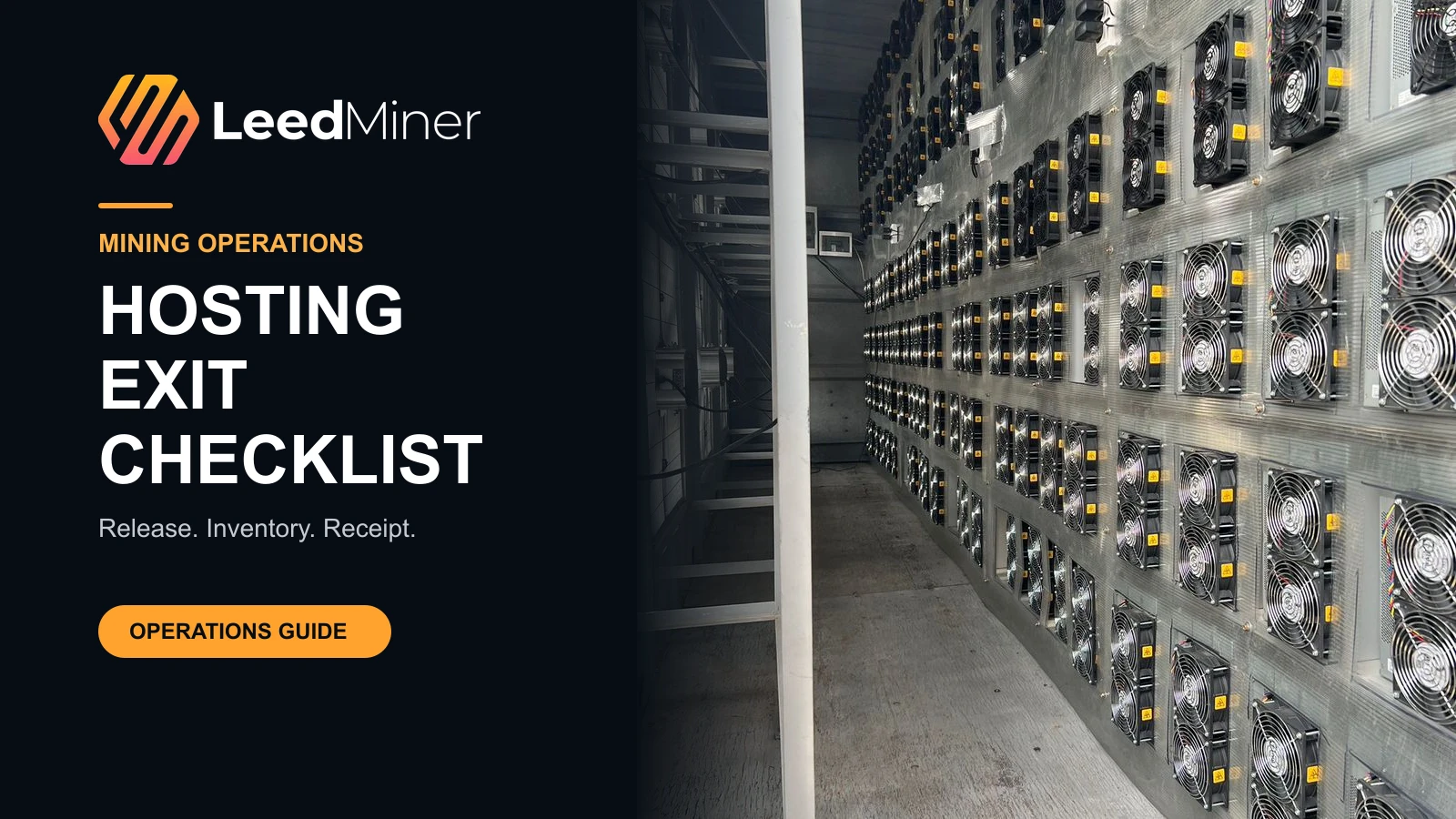
To move a hosted ASIC miner out of a facility, obtain a confirmed release process, reconcile the individual machines and agree how custody will pass to the carrier and receiver. Stopping mining, ending a hosting plan and receiving the equipment are separate milestones. A useful exit record tracks all three without treating a support ticket as proof that the machines have left the rack.
This guide is an operational checklist for owners planning a return or relocation. It does not establish cancellation rights, a refund entitlement or LeedMiner contract terms. Provider documents checked on November 26, 2026 illustrate why the plan and agreement must be identified first. The facility photographs show equipment context, not a documented customer withdrawal.
1. Confirm the exit route and the dates that apply
Start with the hosting agreement attached to the actual units. Record the provider, facility, plan name, agreement reference, current term and renewal date. Then state the requested outcome: return to the owner, relocation to another facility, sale, or retirement. These outcomes can require different instructions even when the same machine is involved.

For example, Compass Mining's standard hosting FAQ describes an advance support request for end-of-term shipment. Its separate Easy Exit FAQ describes a monthly plan and a different cancellation notice. These are provider-specific examples, not interchangeable instructions. Request the current agreement and written instructions for your own plan rather than borrowing another customer's deadline.
Build a dated action list from that written response. Keep the date notice was sent, the provider's acknowledgement, the agreed stop date, the expected release window and the receiving site's availability separate. If the provider gives an estimate, label it as an estimate. A target collection date is not a confirmed carrier booking, and a booking is not confirmation that the facility has released the equipment.
| Question for the provider | Record to request | Do not assume |
|---|---|---|
| Which exit route applies? | Plan and agreement reference, written procedure | Every plan can be cancelled on the same notice |
| When does each service stop? | Separate operating, billing and release dates | Going offline ends all charges |
| What must be settled? | Itemized balance and deposit treatment | A deposit automatically pays the final invoice |
| Who arranges transport? | Packing, collection and receiving responsibilities | The hosting team has booked the carrier |
Ask for each proposed charge or adjustment to be identified by purpose and basis: hosting balance, dismantling, packing, storage or transport, where applicable. Keep unresolved items visible. This is a reconciliation task; do not silently deduct an expected deposit refund from an invoice or treat an estimate as an agreed final balance.
Also distinguish return from disposal. Compass's retirement FAQ describes a route that transfers ownership to the provider, whereas shipment to the customer's address is a separate option. If your intended outcome is to receive the machine, the written instruction should say that clearly. Resolve ambiguous wording before anyone acts on it.
For a proposed LeedMiner deployment, use the hosting inquiry to ask about the actual facility and exit process. Confirm the applicable arrangement in writing; this checklist does not add a notice period, service level or refund promise to it.
2. Reconcile the fleet before authorizing collection
Create one row for each unit leaving the facility. Link the full model, private serial reference, asset record, current location and destination. Mark units that are operating, already offline, awaiting parts or held at a repair center. A purchase quantity is not necessarily the quantity available at one collection point.

Compare this exit list with the operator's physical inventory. Use our worker and asset-register guide to keep operational labels linked to hardware identity. A pool worker name can help locate a record, but it is not a substitute for checking the machine's identifier. Record any replacement unit with its previous and current references.
Preserve a final operating snapshot when available: collection time and time zone, unit reference, firmware identification, reported state and relevant open service issues. State what was observed and what was not checked. An online dashboard does not certify cosmetic condition, complete accessories or future operation after transport. Ask for the specific evidence needed to resolve those separate questions.
Agree which accessories and packing materials travel with each unit. The receiving team should know whether a line means a complete miner, a separately packed component or a unit with a documented missing item. For an Antminer being sent through a repair route, follow the separate repair packing checklist and current receiving instructions. Do not reuse a repair-center address for an ordinary hosting relocation.
The exact catalog model below provides an equipment reference. It does not identify a particular hosted unit, its condition or whether it has been cleared for release.
Antminer S21 XP 270 TH/s

Air-cooled Bitcoin miner. Match the physical unit to its private asset and service record before handover.
Assign someone to approve the reconciled list and someone to receive it. If only part of the fleet is ready, split the consignment explicitly. Keep a separate open record for machines still under repair instead of marking the entire batch dispatched. Any later substitution should update the packing list, collection record and receiving instruction together.
3. Track custody, receipt and closure separately
Before collection, connect each package identifier to its contents and destination. Confirm who will supply the tracking reference and who will investigate a missing or damaged consignment. Keep shipment documents and private serial details in the restricted handover file. Public photographs should not expose customer addresses or account information.

| Milestone | Evidence to retain | Next unresolved question |
|---|---|---|
| Release confirmed | Provider confirmation and approved unit list | Has collection actually occurred? |
| Collected | Carrier reference, package count and handover time | Has the receiver accepted the packages? |
| Received | Count, identity and visible-condition record | Are there discrepancies to investigate? |
| Recommissioned | Separate installation and operating acceptance | Are financial or access items still open? |
At arrival, compare package count and machine identity with the dispatch record before closing the logistics task. Use the delivery damage evidence checklist for visible exceptions. Receipt alone does not establish that the new site is ready to power the machines; installation and restart need their own applicable procedures.
Close the old operating record at the documented cutoff. Reconcile remaining pool balances separately using the pool payout reconciliation guide. A miner leaving a facility does not automatically settle a pool balance or close the hosting account. Have the responsible account owner review remaining access through the access-handover checklist where that scope applies.
Finish with an exceptions list: missing unit, disputed amount, pending credit, unresolved shipment issue or unverified access change. Give each item an owner, the evidence still needed and a next review date. For a LeedMiner hosting inquiry, send the model, quantity, intended destination and proposed timing. A clear exit scope helps both teams identify what must be confirmed before the move can proceed.