


SUMMARY
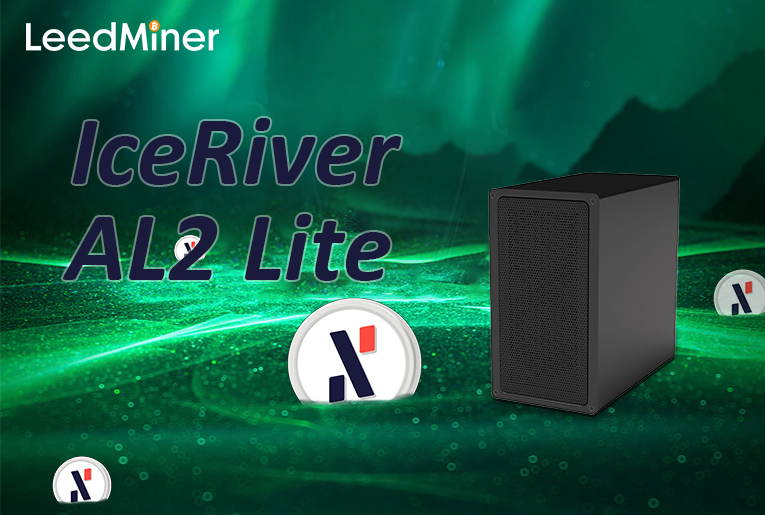
Alephium (ALPH) Compared to traditional cryptocurrencies like Bitcoin, Alephium offers significantly faster transaction speeds while retaining the security and reliability of PoW systems. These attributes are driving a growing interest in Alephium mining, making it an attractive option for crypto enthusiasts. The IceRiver AL2 Lite is a recently launched, high-performance Alephium miner designed specifically for the Blake3 algorithm. With its impressive specifications and energy-efficient design, let’s take a closer look at why the IceRiver AL2 Lite is gaining attention in the mining community.
Technical Specifications
IceRiver Al2 Lite is finely optimized for the Blake3 algorithm with a maximum hash rate of 2Th/s at a power consumption of only 500W. The energy efficiency of IceRiver Al2 Lite is 0.25j/Gh.

| Manufacturer | IceRiver |
|---|---|
| Model | AL2 Lite |
| Also known as | ALPH AL2 Lite |
| Release | Oct 2024 |
| Size | 198 x 201 x 110mm |
| Weight | 5000g |
| Noise level | 45db |
| Power | 500W |
| Voltage | 100-240V |
| Interface | Ethernet |
| Temperature | 5 – 40 °C |
| Humidity | 10 – 90 % |
Comparing IceRiver Al2 Lite with other Top Alephium Miners
Now, let’s compare IceRiver Al2 Lite with other top Alephium miners for its hash rate and efficiency. Here is a quick comparison table of top Alephium miners for your reference.

the IceRiver AL2 Lite stands out with excellent profitability per terahash (T) and efficiency, making it an ideal choice for beginner miners or those interested in trying ALPH mining. Here’s a breakdown:
- Price per T: The IceRiver AL2 Lite is priced at $799 with a total hashrate of 2 TH/s, resulting in a cost of $399.50/T.
- Profit per T: The daily net profit per terahash is $2.77/T, making it one of the most profitable options in the chart.
- Payback Period: The payback period is just 144 days, which is impressive for a home miner.
- Power and Efficiency: With a power consumption of 500W and an efficiency of 0.25 J/Gh, it’s well-suited for home use without consuming excessive electricity.
In summary, the IceRiver AL2 Lite offers an excellent balance of affordability, profitability, and user-friendly design, making it a great option for new miners or small-scale operations. As always, ensure to account for electricity costs and the market stability of the coin before investing.
Alephium Price History
Since the value of cryptocurrencies can change dramatically, tracking their price history is imperative. For those in the Alephium mining sector, understanding its price trajectory and performance can be instrumental predicting earnings and guiding decision-making.

Alephium (ALPH) has exhibited significant price fluctuations over the past year, reflecting the inherent volatility of the crypto market. Starting the year near $4, its value saw a notable decline before stabilizing mid-year and rebounding toward the end, now surpassing $2. This recovery indicates renewed market interest, presenting potential opportunities for miners. However, its historical volatility suggests that careful monitoring of market dynamics is essential to maximize profits. Factors such as regulatory changes, market trends, and project developments may also impact its price. Flexible strategies and staying informed are crucial for miners to capitalize on opportunities while minimizing risks.
IceRiver Al2 Lite Profitability
ASIC (Application Specific Integrated Circuit) miners are specialized hardware designed for specific mining algorithms, offering optimized performance but requiring a significant upfront investment. For miners, understanding the ROI and profitability of devices like the IceRiver AL2 Lite is crucial. However, mining profitability depends on various factors beyond hardware quality, such as cryptocurrency prices, electricity costs, network competition, market trends, regulatory updates, and algorithm changes. Careful analysis of these factors is essential before purchasing mining equipment. IceRiver AL2 Lite, a rising star in the mining hardware market, is specifically optimized for mining Alephium (ALPH). With exceptional energy efficiency at 0.25 J/Gh and outstanding computational power, it enables miners to efficiently mine ALPH while minimizing electricity costs. Recently, ALPH has shown significant price growth, fueled by its strategic partnership with GIGATONS to integrate Alephium’s blockchain into their RWA (Real-World Asset) projects. This development unlocks substantial potential for ALPH, presenting an exciting opportunity for miners. With the IceRiver AL2 Lite, you can capitalize on this trend and begin your profitable crypto mining journey with confidence!
Future Perspective of IceRiver AL2 Lite
Alephium (ALPH) is rapidly gaining traction in the crypto space due to its scalability, security, and innovative blockchain design. The recent surge in ALPH’s price is a testament to its growing market recognition and the increasing interest in its ecosystem. Notably, Alephium’s strategic partnership with GIGATONS to integrate its blockchain technology into RWA (Real-World Asset) projects highlights its vast potential for real-world applications, further boosting its value and appeal to miners. Amid this growth, the IceRiver AL2 Lite has emerged as one of the top-performing ALPH Home miners in 2024. With a remarkable hash rate of 2Th/s and industry-leading energy efficiency of 0.25 J/Gh, the AL2 Lite enables miners to efficiently mine ALPH while minimizing electricity costs, making it a highly cost-effective choice. This exceptional performance positions it as a key player for those looking to capitalize on ALPH’s upward trajectory. However, as with any mining hardware, the future outlook of the IceRiver AL2 Lite depends on several factors. The increasing popularity of Alephium mining could lead to a rise in network difficulty as more miners join, potentially impacting profitability. Similarly, the introduction of newer, more advanced miners may influence the competitive landscape. That said, Alephium’s expanding utility in RWA projects signals a strong long-term future for the coin, offering substantial rewards for early adopters of efficient hardware like the IceRiver AL2 Lite. By leveraging its cutting-edge energy efficiency and computational power, miners can seize the opportunity to mine ALPH effectively, benefiting from the coin’s promising growth and market potential. The IceRiver AL2 Lite is a cutting-edge Alephium Home miner specifically optimized for the PoW-based Blake3 algorithm. Boasting an impressive hash rate of 2Th/s, it empowers miners to efficiently solve complex mining puzzles while maintaining exceptional energy efficiency, even as mining difficulty increases. In the crypto mining hardware industry, acquiring reliable and high-quality equipment remains a significant challenge, with fraudulent activities being a common concern. Therefore, miners should conduct thorough research before purchasing ASIC miners and ensure they buy the IceRiver AL2 Lite from trusted and reputable distributors. With its superior energy efficiency and performance, the IceRiver AL2 Lite can significantly enhance mining profitability and operational efficiency, making it an excellent choice for those entering the Alephium mining space.