


SUMMARY
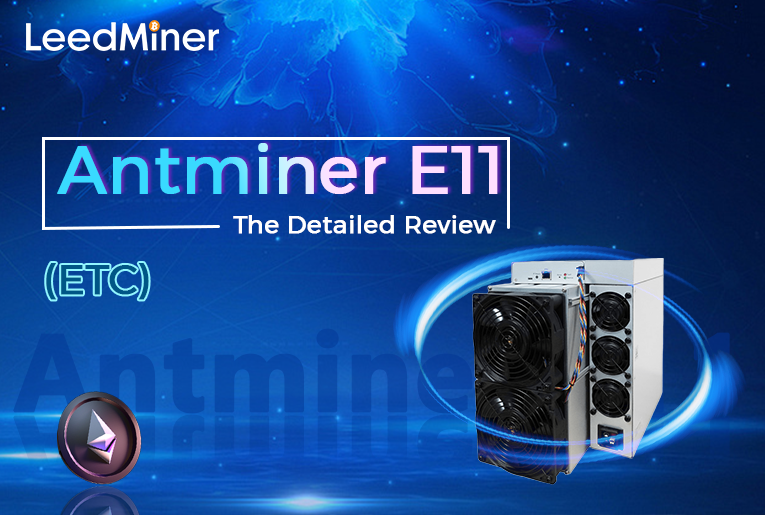
The Antminer E11 is a highly efficient cryptocurrency mining machine that offers competitive profitability, especially for Ethereum Classic (ETC) miners. With a daily revenue of $8.18 and a net daily profit of approximately $5.93, the Antminer E11 is an appealing option for miners seeking to optimize their returns. However, its future performance is subject to fluctuations in ETC prices, network difficulty, electricity costs, and advancements in mining technology. This article delves into the Antminer E11’s current profitability, factors influencing its future, and its position in the evolving mining landscape.
Technical Specifications

| Manufacturer | Bitmain |
|---|---|
| Model | Antminer E11 (9Gh) |
| Release | Jan 2025 |
| Size | 400 x 195 x 290mm |
| Weight | 14200g |
| Noise level | 75db |
| Fan(s) | 4 |
| Power | 2340W |
| Interface | Ethernet |
| Temperature | 5 – 45 °C |
| Humidity | 5 – 95 % |
Comparing Antminer E11 with Other Top ETC Miners

Here is a comparative analysis of the mining machines based on the provided table data, covering performance, cost-effectiveness, and availability:
1. Hashrate and Power Consumption Comparison
- Highest Hashrate
Bombax Miner EZ100 (12.5 GH/S), but it also has the highest power consumption (2300 W) and moderate efficiency (0.184 J/Mh).
- Lowest Power Consumption
Bombax Miner EZ100-C (760 W), but its hashrate is only 4 GH/S, with slightly lower efficiency (0.19 J/Mh).
- Best Energy Efficiency
iPollo V2 (0.151 J/Mh), with a power consumption of 1500 W and a hashrate of 10 GH/S, offering the best energy efficiency.
2. Cost and Payback Period
| Model | Price (USD) | Cost per GH/S (S/G) | Payback (Days) | Net Profit Per Day (USD) |
|---|---|---|---|---|
| Bombax Miner EZ100 | 13,100 | 1,048.00 | 1290 | 10.15 |
| iPollo V2 | 11,999 | 1,199.90 | 1345 | 8.92 |
| Antminer E11 | 5,350 | 594.44 | 798 | 6.70 |
| Jasminer X16-P | 4,029 | 694.66 | 1008 | 4.00 |
| Bombax EZ100-C | 3,100 | 775.00 | 934 | 3.32 |
- Best Cost-Effectiveness
Antminer E11, with the lowest cost per GH/S (594.44 S/G) and the shortest payback period (798 days).
- High Investment, High Return
Bombax EZ100 has the highest daily net profit (10.15 USD) but a longer payback period (1290 days).
- Budget-Friendly Option
Bombax EZ100-C has the lowest initial cost (3,100 USD), but its payback period and daily profit are less impressive.
3. Efficiency and Long-Term Profitability
- Energy Efficiency Advantage
iPollo V2 has the best efficiency (0.151 J/Mh), resulting in lower electricity costs over time, making it suitable for regions with high electricity prices.
- Energy Efficiency Disadvantage
Jasminer X16-P has the lowest efficiency (0.328 J/Mh), and its high power consumption may offset its lower price.
- Balanced Choice
Antminer E11 strikes a good balance between efficiency (0.26 J/Mh), cost, and payback period.
4. Inventory and Availability
- Out of Stock Models
Bombax EZ100 and iPollo V2 are currently out of stock, requiring users to wait for restocking.
- In-Stock Models
Antminer E11, Jasminer X16-P, and Bombax EZ100-C are available for immediate purchase, suitable for users needing quick deployment.
5. Comprehensive Recommendations
- Quick Payback
Antminer E11 (798 days payback, lowest cost per GH/S).
- High Hashrate Demand
Bombax EZ100 (12.5 GH/S), but it comes with high costs and stock availability risks.
- Energy Efficiency Priority
iPollo V2 (0.151 J/Mh), ideal for long-term mining in regions with high electricity costs.
- Low-Budget Entry
Bombax EZ100-C (3,100 USD), but with lower daily profits.
Key Considerations
- Electricity Costs
High-power models (e.g., Bombax EZ100) may significantly reduce net profits in regions with high electricity prices.
- Market Volatility
Cryptocurrency prices and mining difficulty fluctuations can directly impact payback periods, requiring dynamic risk assessment.
- Hardware Maintenance
In-stock models (e.g., Antminer E11) can reduce operational downtime caused by stock shortages. Based on this analysis, users can select the most suitable mining machine model according to their budget, electricity costs, and risk tolerance.
ETC Coin Prices History

Below is a comprehensive analysis based on the provided data for Ethereum Classic (ETC):
Trading Volume and Market Activity
- 24-Hour Trading Volume: Ethereum Classic recorded a trading volume of $157,619,404 over the last 24 hours.
- Recent Change: This volume represents a 51.70% decrease from the previous day, indicating a significant decline in recent market activity.
- All-Time High (ATH): The highest price ever reached by Ethereum Classic is $167.09, recorded on May 06, 2021 (nearly 4 years ago). The current price is 87.47% lower than this peak, illustrating a significant price correction from its historic high.
Price History and Current Performance
- All-Time Low (ATL): The lowest price recorded is $0.615, set on Jul 25, 2016 (over 8 years ago). Compared to this low, the current price is 3,303.24% higher, reflecting substantial long-term growth
- Market Cap: Ethereum Classic’s market capitalization stands at approximately $3,173,888,112, ranking it #44 on CoinGecko.
Market Capitalization and Fully Diluted Valuation (FDV)
- Fully Diluted Valuation (FDV): The FDV is also $3,173,888,112, calculated by multiplying the current token price by the total maximum supply (210 million tokens), even though only 150 million tokens are actively circulating.
- ETC’s 7-Day Performance: Over the past week, Ethereum Classic’s price has declined by 17.80%.
- Global Cryptocurrency Market: The overall crypto market is down by 8.50% in the same period.Short-Term Price Performance Relative to Peers
- Comparable Smart Contract Platforms: Similar platforms have experienced a decline of 6.10%
Antminer E11 Profitability

The Antminer E11 generates a daily revenue of $8.18 by mining 0.38718 ETC. Its efficient performance is underscored by a relatively low daily electricity cost of approximately $2.25, factoring in its 2340W power consumption at an electricity rate of $0.04 per kWh. As a result, the miner secures a net profit of about $5.93 per day. This profitability translates to an estimated monthly net gain of roughly $177.90, highlighting its competitive advantage in the current cryptocurrency mining landscape.
Future Perspective of Antminer E11
The Antminer E11, with its solid daily profitability, positions itself as a reliable and efficient choice for cryptocurrency miners in the current market. However, its future performance will be influenced by several factors:
Ethereum Classic Price Fluctuations
The profitability of the Antminer E11 is closely tied to the price of Ethereum Classic (ETC). If the price of ETC rises, the miner’s daily revenue and overall profitability could see significant improvements. Conversely, a price drop may negatively impact earnings.
Network Difficulty
As more miners join the network and mining difficulty increases, the Antminer E11’s daily yield could decrease. However, if the miner continues to be one of the more efficient models in the market, it may still maintain a competitive edge.
Electricity Costs
Given that electricity is one of the largest ongoing expenses for miners, any rise in energy prices could impact the Antminer E11’s profitability. However, the miner’s relatively low power consumption (2340W) positions it well against other higher-power models in this regard.
Technological Development
Newer mining models may emerge, offering greater hash rates or energy efficiency, potentially putting pressure on the Antminer E11’s market share. However, the model’s longevity will depend on how well it can adapt to or integrate with future advancements in mining technology. In conclusion, the Antminer E11 presents a solid mining solution with strong profitability based on current conditions. While it faces challenges like potential fluctuations in ETC value and increasing network difficulty, its efficiency and relatively low power consumption make it an attractive choice for miners. Moving forward, its profitability will be shaped by broader market trends and advancements in mining technology, but for now, it remains a competitive option in the market.